
Intro: The Best Portable Power Station For CPAP Machines
By: Jonny Graham | Updated March 2026 | 9 min read time
If you rely on a CPAP machine, losing power is more than just an inconvenience. It can be a serious health risk.
In this article, we review a few of the top portable power stations to determine which can run a ResMed AirSense or Philips DreamStation for over 2 nights.
Tip for a longer battery life when off-grid: Turn off your CPAP’s Heated Humidifier and Heated Tube to extend battery life by almost double.
Also by using a 12 V DC converter cable instead of the 3 pin wall plug you will get 30% more runtime.
Using the 3 pin wall plug (AC): The battery has to convert DC to AC, and the CPAP brick converts it back to DC. You lose 30% of your power to heat.
By using the 12V converter cable (DC): It is a direct feed. You get 30% more runtime instantly just by swapping the cable.
Here’s how different CPAP models perform on direct DC
| Machine Model | Avg Power Draw (DC direct, no humidifier) | 8-Hour Night Consumption |
|---|---|---|
| ResMed AirSense 10 | 12–18 W | 96–144 Wh |
| ResMed AirSense 11 | 9–15 W | 72–120 Wh |
| Philips DreamStation | 12 W | 96 Wh |
| ResMed AirMini (Travel) | 5–10 W | 40–80 Wh |
You can figure out your battery’s run time using this simple formula:
Battery Capacity in Wh x 0.85 ÷ CPAP Model Wattage = Hours of Sleep
(Multiply by 0.85 to factor in the power stations battery efficiency.)
For Example:
The Jackery Explorer 500 v2 (512 Wh) and the ResMed AirSense CPAP from the table above require 18 W.
First, multiply the battery’s capacity by 0.85:
512 x 0.85 = 435.2 Wh.
Next, divide 435.2 by your device’s power use in Watts W:
435.2. ÷ 18 = 24 hours of runtime.
Here’s what it looks like in practice:
| Item: Jackery Explorer 500 v2 | Value |
|---|---|
| Power station capacity | 512 Wh |
| Efficiency factor | 0.85 |
| Effective usable energy | 512 × 0.85 = 435.2 Wh |
| CPAP power draw | 18 W |
| Runtime formula | 435.2 Wh ÷ 18 W |
| Estimated runtime | ≈ 24 hours of sleep (3 nights at 8 hours/night) |
Option A: Jackery Explorer 500 v2
Who is this for? It’s ideal for campers who need a few nights of off-grid sleep, plus some additional capacity to charge phones, etc.
Why does it stand out? This model is the industry standard because it weighs just 5.7 Kg, making it easy to carry to the campsite, yet it still features a powerful 512Wh battery.
With the humidifier off and using a 12 V DC charger, you’ll get up to 3 nights of use.
Pros:
- It offers reliable and rugged build quality.
- You can safely use sensitive medical equipment with its pure sine wave inverter.
- The carry handle is comfortable and easy to use.
Cons:
- 500W limit means it cannot run high-draw heating appliances like kettles.
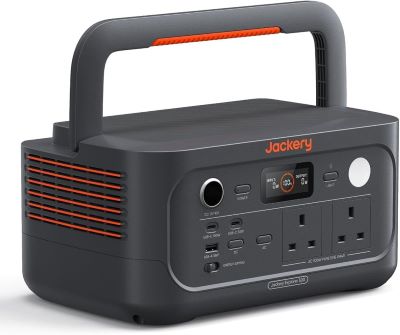
Jackery Explorer 500 v2
Best For Portability
512Wh Capacity
Budget Friendly
Option B: EcoFlow Delta 2
Ideal for homeowners who worry about losing power during storms.
| Item: EcoFlow DELTA 2 | Value |
|---|---|
| Power station capacity | 1024 Wh |
| Efficiency factor | 0.85 |
| Effective usable energy | 1024 × 0.85 = 870.4 Wh |
| CPAP power draw | Using the Resmed Airsense example (18 W) from the table above. |
| Runtime formula | 870.4 Wh ÷ 18 W |
| Estimated runtime | ≈ 48 hours of sleep (6 nights at 8 hours/night) |
The EcoFlow Delta 2 is Ideal for home backup and can be expanded with extra batteries as your needs grow.
The Pros & Cons Of The Delta 2
Pros:
The Delta 2 charges from empty to 80% in only 50 minutes. If you lose power, you can quickly recharge it before another storm arrives. Its LiFePO4 battery means you can use it daily for up to 10 years.
With the humidifier off and using a 12 V DC charger, you’ll get up to 6 nights use before needing a recharge.
The battery lasts a long time, with over 3,000 charge cycles, approximately 10 years of daily use.
Cons:
It is heavier than the Jackery model.
The cooling fan can be noisy under heavy load or during fast charging, which might bother light sleepers.
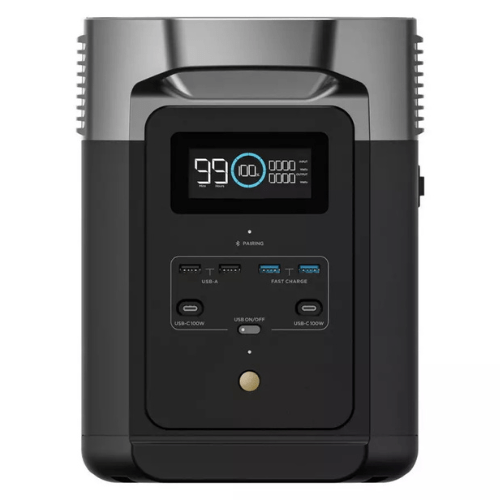
EcoFlow Delta 2
Best Backup for Blackouts
1024 Wh
10 Years Daily Use
Fast Charging Time, 0-80% in 50 Minutes
Must-Have Cables:
The AC cord that comes with your CPAP is only for wall outlets, not for battery use. Instead, get a 12V DC adapter that fits your machine. The Amazon UK options listed here are reliable choices.
For ResMed AirSense 10 / AirCurve Users
You don’t need to buy the official ResMed cable. The KFD 24V adapter works just as well and costs less. It converts 12V power to the 24V your ResMed machine requires.
Works with: AirSense 10, AirStart 10, AirCurve 10

KFD ResMed Adapter
For ResMed Users (AirSense 10 / AirCurve) 12V-24V adapter
£30.99
For Philips DreamStation Users
Philips CPAP machines work well with 12V DC power. The KFD 12V car adapter provides safe and reliable use, and its shielded cable makes it easy to connect directly to your power station.
This adapter is compatible with DreamStation 2, DreamStation Go, and System One models.
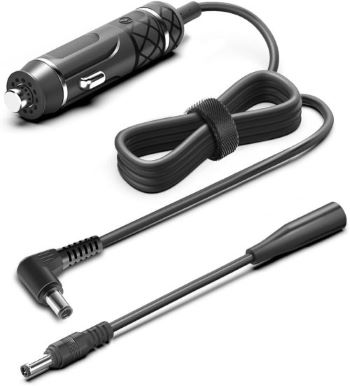
KFD DreamStation Adapter Cable
Compatible with: DreamStation 1 & 2, DreamStation Go, and System One.
£19.99
The CPAP Camping Setup:
If you live in your van full-time or plan long camping trips, pairing a power station with solar panels gives you a reliable off-grid setup.
Example: The Van Lifer’s CPAP Setup
- Power Station: EcoFlow Delta 2 (1,024 Wh). This can run your CPAP for 5 to 6 nights.
- Solar Panels: 200-400W, either portable or (rigid panels mounted on van roof)
- Cables: 12V DC CPAP adapter + Solar Panel MC4 to XT60 adapter
- The solar panels recharge the power station during the day. This way, you can power your CPAP at night.
- Result: You get ongoing off-grid power, as long as there is sunlight.
This setup gives you full energy independence while camping.
If you’re not sure how much solar power you need for your power station, try our Solar Panel Calculator. Size your system based on your CPAP’s power use and where you’ll be camping.
CPAP Camping Tips for Success
- Turn off the heated humidifier. This can make your battery last up to 50% longer and improve air quality at higher altitudes.
- Use a 12V DC adapter. You’ll get about 30% more runtime compared to using an AC adapter.
- Camp in sunny spots. If you use roof-mounted solar panels, where you park really matters.
- Check your setup the night before to make sure your power station charges your CPAP properly before you go on your trip.
Ready to Camp with CPAP?
For power station recommendations based on your camping needs, visit our Best Buys page. It will help you pick the right gear for both short and long trips.
CPAP Power Station Size: How Much Capacity Do You Need?
To pick the right power station size, think about your CPAP model, how many nights you’ll be off-grid, and your budget. Here’s a simple guide to help.
Quick Reference: Power Station Sizes for CPAP
| Use Case | Recommended Capacity | Best Models | Why |
| Emergency Backup (1-2 nights) | 300-500 Wh | Jackery 500 / Bluetti EB3A | Budget-friendly, portable, 2-3 nights runtime |
| Camping (3-5 nights with solar) | 1,000 Wh | EcoFlow Delta 2 / Jackery 1000 v2 | Mid-range, fast charging, good for weekends |
| Van Life (weeks/months with solar) | 2,000+ Wh | Bluetti AC200L / EcoFlow Delta Pro | Large capacity, expandable, perfect for full-time |
How to Calculate Your Needs
Using the formula from earlier:
(Battery Wh × 0.85) ÷ CPAP Wattage = Hours of Runtime
Example:
- ResMed AirSense 10 uses 18W
- You want 2 nights of power (16 hours)
- Required: 16 hours × 18W = 288 Wh minimum
- Recommended: 500+ Wh. This gives you a safety buffer and extra power for other devices.
For 5 nights: 5 nights × 8 hours × 18W = 720 Wh. It’s best to have a power station with at least 1,000 Wh.
For weeks of camping with solar, any large power station (1,500+ Wh) will work if you can recharge it with solar during the day.
For CPAP Camping Budgeting
Emergency Backup (~£300-400)
- Jackery Explorer 500 v2 or Bluetti EB3A
- Good for: Power cuts, short camping trips
- Runtime: 2-3 nights (CPAP only)
Weekend Camping (~£500-700)
- EcoFlow Delta 2 or Jackery Explorer 1000 v2
- Good for longer camping trips and charging other items like phones and lights.
- Runtime: 4 to 6 nights if you use your CPAP without the humidifier.
Van Life (~£1,500-2,500)
- Bluetti AC200L + solar panels
- Good for: Full-time off-grid living
- Runtime: Unlimited, as long as you recharge with solar each day.
If you’re still not sure which budget tier is right for you, check out our Power Station Reviews. Click the power rating size you require and compare different options in detail to help you make a confident choice.
Next Steps
- Calculate your CPAP runtime needs using the formula above.
- Choose a budget tier.
- Add solar panels if planning trips longer than 5 days.
- Review our Best Buys page for our top recommendations in each tier.
- Use our Solar Panel Calculator to size solar for your power station and location.
CPAP FAQ
Can I bring a portable power station on a plane?
No, Most airlines and the FAA only allow batteries with a capacity of up to 160 Wh. The Ecoflow DELTA 2 and the Jackery 500 are too big. For flights, use a travel CPAP battery.
Does using a heated hose really matter?
Yes, it does. Heating water and air uses a lot of energy. When camping, set the humidity to 0 or Off to save power overnight.
How quiet are portable power stations when running a CPAP machine at night?
Most modern power stations are almost silent (fanless or very low fan noise under light loads like a CPAP).
Can a portable power station power my CPAP plus other devices (like a phone or fan) at the same time.
Yes, as long as the total wattage stays within the station’s output rating. USB ports are handy for charging small devices overnight without draining the main battery too quickly.

