The Portable Power Station Guide (2026)

Introduction:

Buying a portable power station feels complicated. You look at the specs and see terms like Pure Sine Wave, MPPT, LiFePO4, and Surge Watts. It’s enough to make you close the tab and give up.

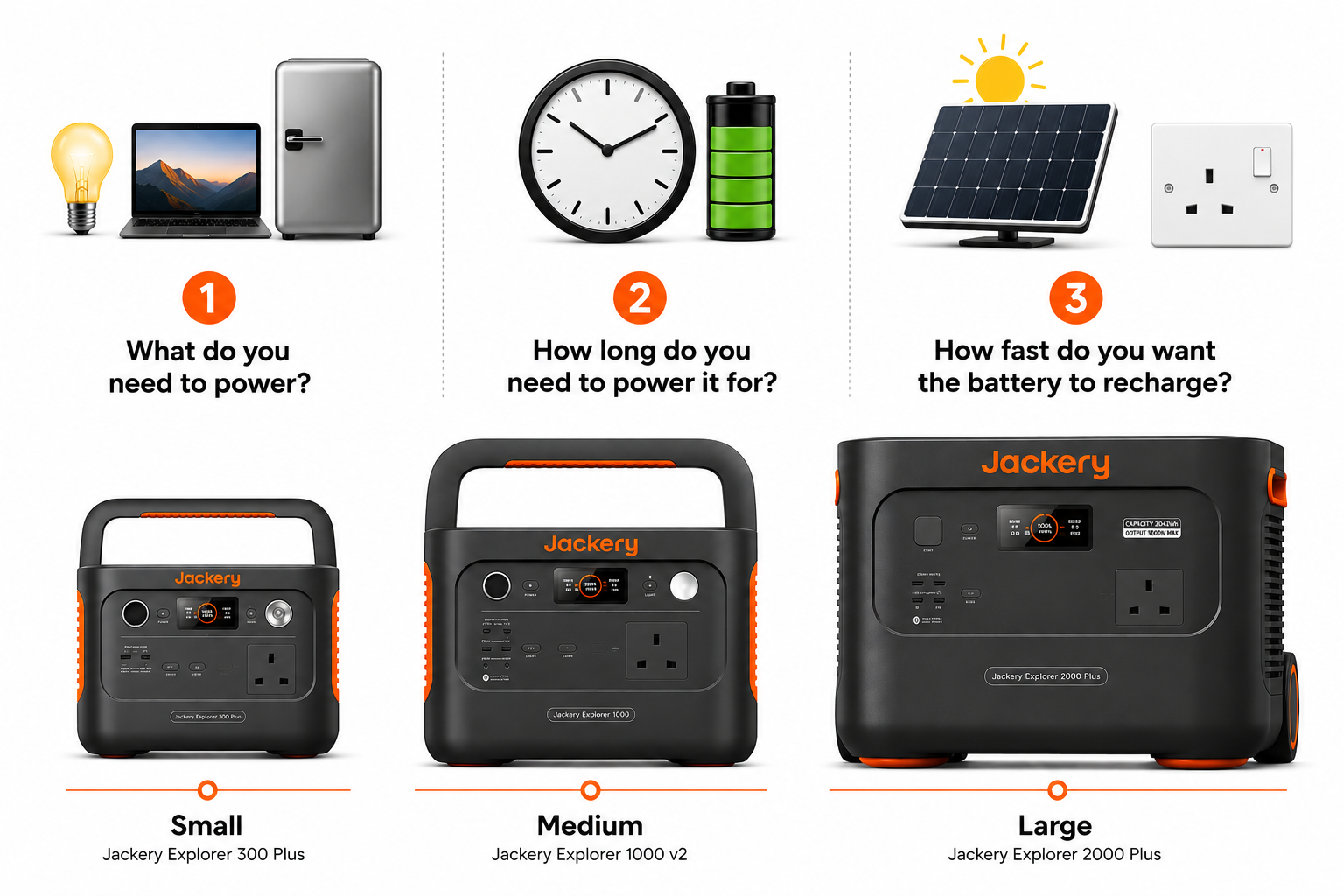
But you only need to answer three simple questions to find the perfect power station.

1. What do you need to power? (This tells you the watts you need)

2. How long do you need to power it for? (This tells you the Watt-Hours you need)

3. How fast do you want the battery to recharge? (This depends on the Solar or AC Input)

This guide explains the jargon and converts everything into simpler terms, helping you to pick the right power station the first time.

Start Here Image
Start Here

Think Of A Power Station Like A Car

When looking at the specifications of  Portable Power Stations you will notice 2 key ratings Watts (W) and Watt-Hours (Wh)
 
Watts (W) : The Engine - Watts tells you how powerful the station is. If your microwave needs 1000W, but your power station only provides 500W the microwave wont turn on.

Always choose a model that has more watts than the wattage of the devices you want to use at the same time.

Watt-Hours (Wh) = The Fuel Tank

Watt-hours tell you how long the battery will last.

Example:

A 1000Wh station powering a 50W TV will run it for roughly: 1000 ÷ 50 = 20 hours.

That's it - Watts =engine power, Watt-hours= fuel tank size.

Battery Types

NMC (Lithium-Ion)

These are found in older or Budget models.

Pros: Lighter weight. Easy to carry around.

Cons: Shorter lifespan. (usually around 500 cycles) loses capacity faster over time.

LiFePO4 (LFP)

This is the newer, more durable battery type.

Pros: Extremely long life. (3,000+ cycles (10+ years of daily use). Very safe and stable.

Cons: Slightly heavier.

Best Choice: Unless your'e backpacking or hiking. LiFePO4 is nearly always the smarter investment.

Battery Types
What Size Do You Need

What Size Do You Need?

What Size Do You Need?

Here's a simple breakdown based on real-world use.

The Weekend Camper (Phone, Drone, Camera, CPAP) 

Recommended Size: 300 – 500Wh.

Why: Light, portable, enough for small gadgets

The Van Lifer / Remote worker 

(Laptop, 12V Fridge, Lights, Fan, Heater)

Recommended Size: 700 – 2000Wh.

Why: Enough power for a fridge and daily work gear.

The Home Backup User

(Fridge, Microwave, Hob, Sump Pump, essentials)

Recommended Size: 2000Wh+.

Why: You need high output to start larger appliances

Solar Charging

A great power station soon becomes frustrating if it takes forever to recharge.

What you want to check is solar input, the maximum watts the station can accept from solar panels.

Example:

You own a 1000Wh power station:

Slow Solar Input (100W) : Takes 12 hours to charge. That's two days of sun.

Fast Solar Input(500W) : Takes 2-3 hours. Done before lunchtime.

If you live in a cloudy area always buy more solar wattage than the battery requires to last the day.

Jackery SolarSaga 100W Solar Panel

Conclusion:

Buying a power station is an investment in convenience, safety, and independance.


If you focus on three things; power (W), battery size (Wh), and recharge speed.


Choosing LiFePO4 and the correct size for your needs ensures your power station will last for years while keeping your essential devices running.


Need some help getting the right size?


Check out our guide: “How to Calculate Your Portable Power Station Size”.


If you don't have time to work it yourself, we created a simple online calculator that helps you choose the exact power station size for your needs. Click the button below to find your perfect power station.


Discover the best portable power stations, solar panels, and solar generators with expert comparisons, buying guides, and real-world scenario reviews.

Portable Power Stations Logo With Thunderbolt
Social
Thank You, we'll be in touch soon.

PortablePowerStations.co is a participant in the Amazon Services LLC Associates Program, an affiliate advertising program designed to provide a means for sites to earn advertising fees by advertising and linking to Amazon.com