
Jackery Explorer 300 Plus Review (2026)UK : The Best ultra Portable Power Station?
By: Jonny Graham | Updated March 2026 | 8 min read time
This year, ultra-portable power stations have become much more popular. In the past, if you wanted a portable battery, you had to carry a heavy, bulky plastic box.
That’s no longer the case. Now, weekend hikers, drone photographers, and digital nomads want as much power as possible in the smallest size.
You need something that fits easily in your backpack or on your car seat without taking up much space.
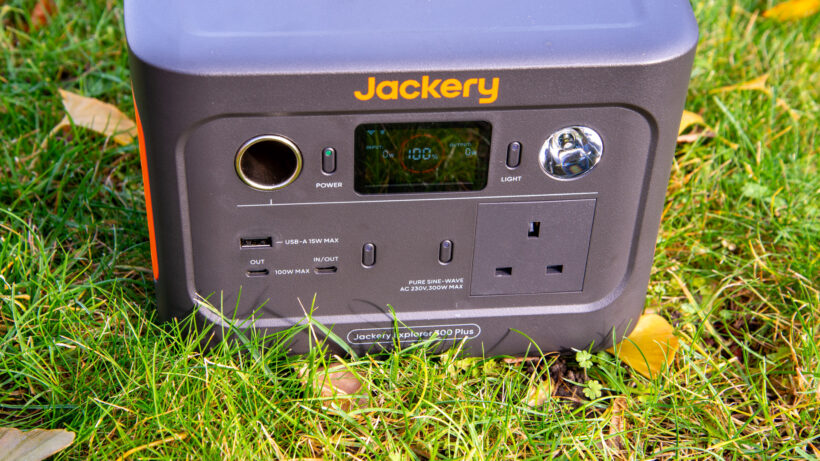
Even better, the Jackery Explorer 300 Plus has a built-in LED light on the front panel, so no extra flashlight is needed for emergencies or setting up camp.

The Jackery Explorer 300 Plus weighs only 3.75 kg and has a tough, book-sized design, so you can take it anywhere.
But with strong competition from models like the EcoFlow River 2, does this small Jackery offer enough value for its price?
Let’s take a closer look.
🏆 Quick Verdict
4.7 out of 5 stars
The Jackery Explorer 300 Plus is an excellent, very compact power station that feels almost indestructible. It has a 288Wh capacity and a 300W continuous AC output, so it’s great for charging laptops, camera batteries, phones, and camping lights.
The main upgrade in the “Plus” series is the use of high-quality LiFePO4 batteries. This means the unit can last up to 10 years of daily use before the battery starts to wear out.
It also runs very quietly, staying under 45dB, and you can control it with an app. While it doesn’t charge as quickly as EcoFlow models when plugged into a wall, its strong build and fold-down handle make it a top choice for people who are always on the go.
Jackery Explorer 300 Plus Features Table
| Feature | Jackery Explorer 300 Plus |
| Battery Chemistry | LiFePO4 (LFP) |
| Battery Capacity | 288 Wh |
| Cycle Life | 3,000 cycles (to 80% capacity) |
| AC Charging Time | 2 hours (0-100% via wall socket) |
| Solar Input Max | 100W (Approx. 4 hours with a 100W panel) Voltage range 12V-27V, max 5A |
| AC Outlets | 1 x 230V Outlet, 300W total (600W surge) |
| DC Outlets | 1 x 12V/10A (car port) |
| USB Ports | 1 x USB-A (15W) + 2 x USB-C (One is 100W In/Out, One is 15W) |
| App Control | Yes (via Jackery app over Wi-Fi and Bluetooth) |
| Weight | 3.75 kg (8.2 lbs) |
| Dimensions | 23.0 x 15.5 x 16.7 cm |
| Warranty | 5 years (3 years standard + 2 years extended) |
| UPS Function | Yes (<20ms auto-switchover) |
| Price | £319 to £419 (often on discount) |
Pros:
- Rugged and easy to pack: The carry handle folds flat, so you can fit it in your car boot or stack other gear on top. This is something you don’t see with most competitors.
- Premium LiFePO4 Battery: The battery lasts for 3,000 cycles, so you could use it every weekend for ten years without worrying about it wearing out.
- 100W USB-C Port: This high-speed port can charge your laptop quickly, and you can also use it to recharge the power station itself—no need for a bulky AC adapter.
- Whisper Quiet: Jackery designed this unit to run at 45dB or less, so it won’t disturb your sleep in a tent or campervan.
Cons:
- Slower AC Charging: Charging from the wall takes about two hours, which is slower than the EcoFlow River 2’s 60-minute charge time.
- Only One AC Outlet: If you want to plug in two 230V devices at once, you’ll need to bring a power strip.
Under the Hood: Built for the Backpack
The Jackery Explorer 300 Plus isn’t meant to power your whole house. It’s really an off-grid backup for your smaller electronics.
A 300W pure sine wave inverter gives you clean power, which is important for sensitive gear like camera chargers, drones, and laptops.
The 288Wh capacity might seem small compared to larger models, but it’s actually enough if you’re just running 12V and USB devices rather than larger AC appliances.
What Can the Jackery 300 Plus Actually Run?
Here’s what you can expect from the 288Wh battery when you’re outdoors:
| Device (Approx. Wattage) | Run Time / Charges |
|---|---|
| Smartphone (15W) | Approx. 14 to 15 Charges |
| Drone Battery (40W) | Approx. 5 to 6 Charges |
| Standard Laptop (60W) | Approx. 3.5 to 4 Charges |
| Camping Fan (15W) | Approx. 15+ Hours |
| LED String Lights (10W) | Approx. 22+ Hours |
| 12V Mini Fridge (60W) | Approx. 3 to 4 Hours |
⏱️ Jackery Explorer 300 Plus Run-Time Calculator
Enter the wattage of your appliance below to see exactly how long the Jackery Explorer 300 Plus will power it.
Estimated Run Time:
—
*Calculation includes a standard 15% AC inverter efficiency loss for real-world accuracy based on the 288Wh capacity.
Charging & Solar: The Off-Grid Setup
If you use a portable battery, how quickly it recharges is just as important as how long it lasts.
The Jackery Explorer 300 Plus offers four charging options. While it does not match the EcoFlow River 2’s fast 60-minute wall charge, it can recharge from a regular wall socket in 2 hours.
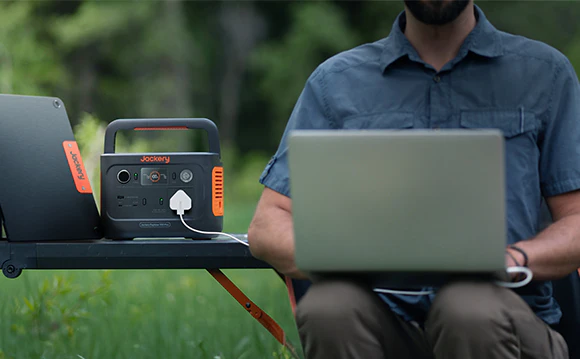
The Jackery is very versatile. Its 100W USB-C port lets you leave the main power cable at home and pack lighter. You can use a high-powered MacBook charger or plug it into a 12V car port while travelling.
Jackery 300 Plus Charge Times
| Charging Method | 0-100% Time |
|---|---|
| Mains Wall Socket (AC) | 2 Hours |
| Solar Panels (100W Max) | 4 Hours (in perfect sunlight) |
| Car Cigarette Lighter (12V) | 5.5 Hours |
| USB-C (100W Input) | 4 Hours |
Solar Charging: The Book Sized Generator
If you want to go completely off-grid, the Jackery 300 Plus features a built-in MPPT charge controller that can handle up to 100W of solar input.
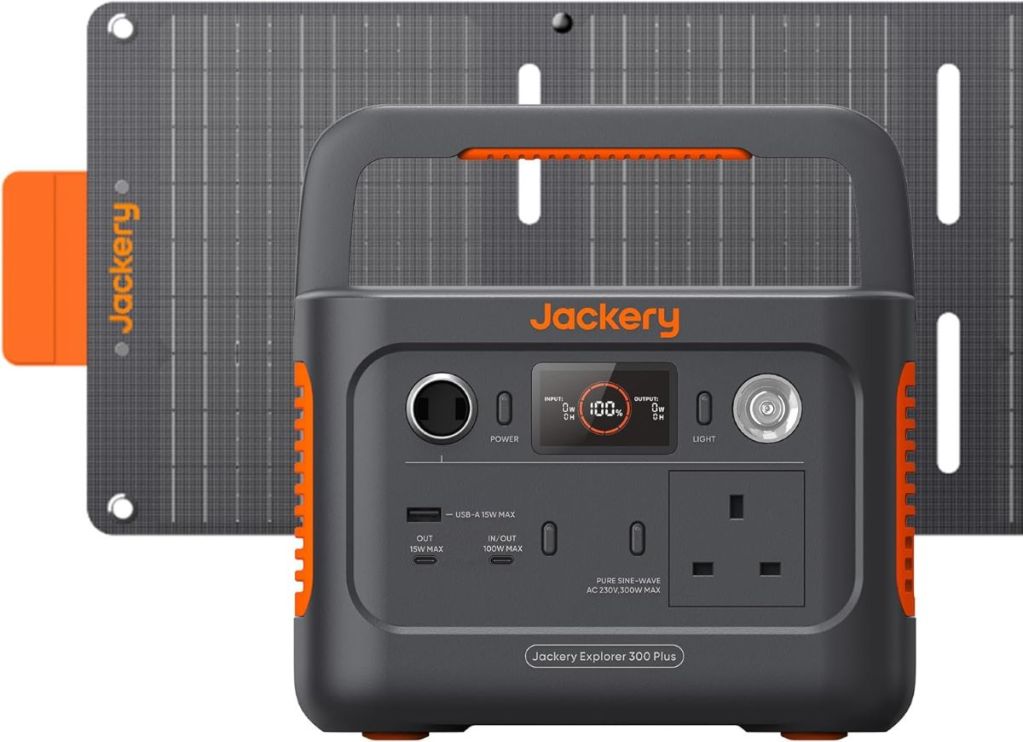
Jackery sells the 300 Plus as a bundle with its ultra-compact 40W ‘Mini’ solar panel, which is literally the size of a tablet when folded. Check Jackery for further details.
However, if you want the fastest possible off-grid charging, we recommend pairing it with 100W of direct, uninterrupted sunlight. You can refill the entire battery from 0 to 100% in just 4 hours.
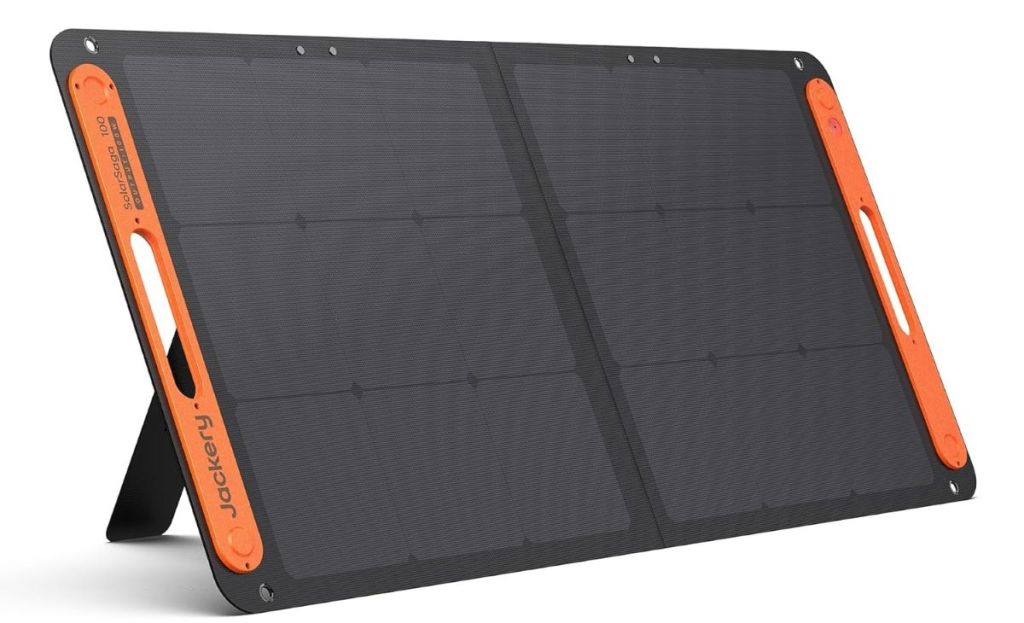
Jackery supplies the foldable SolarSaga 100W solar panel. Check Amazon for the latest prices.
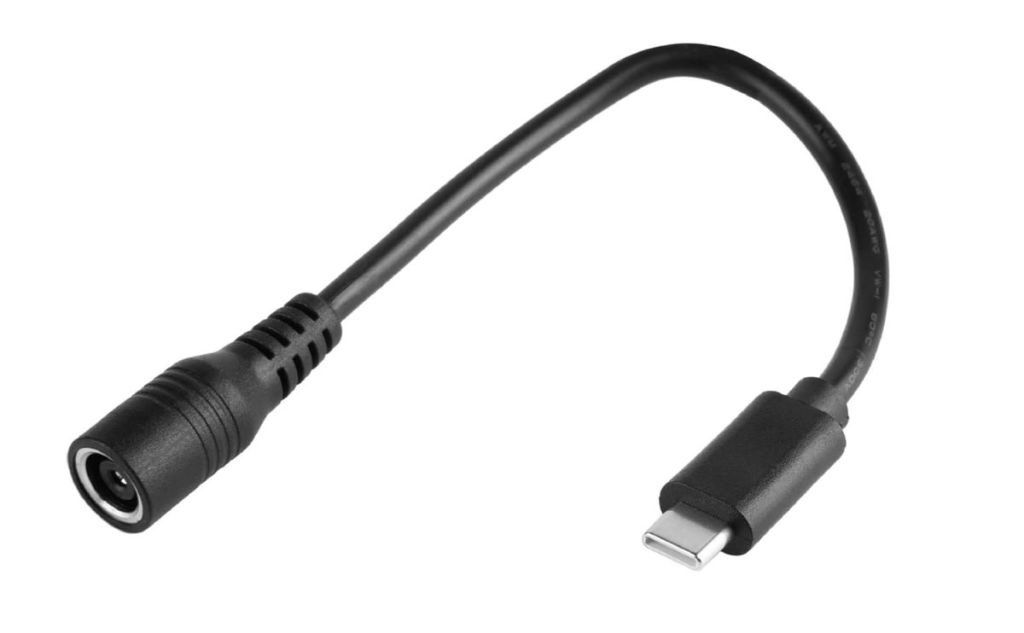
Required Adapter: A DC8020 to USB-C adapter is necessary to connect the 100W panel’s output to the 300 Plus’s USB-C input port. Check Amazon for latest prices.
Solar Panel Charge Speed Comparisons:
| Solar Panel | Time to Full Charge (0-100%) | Best For |
|---|---|---|
| Jackery SolarSaga 40W Mini | 9.5 hours | Ultra-portable, the panel folds to book size and slips easily into the same backpack as the 3.75kg power station. |
| Jackery SolarSaga 100W | 4.6 hours | Faster top-ups while camping or on the road – still folds compactly. |
Jackery Explorer 300 Plus vs EcoFlow River 2
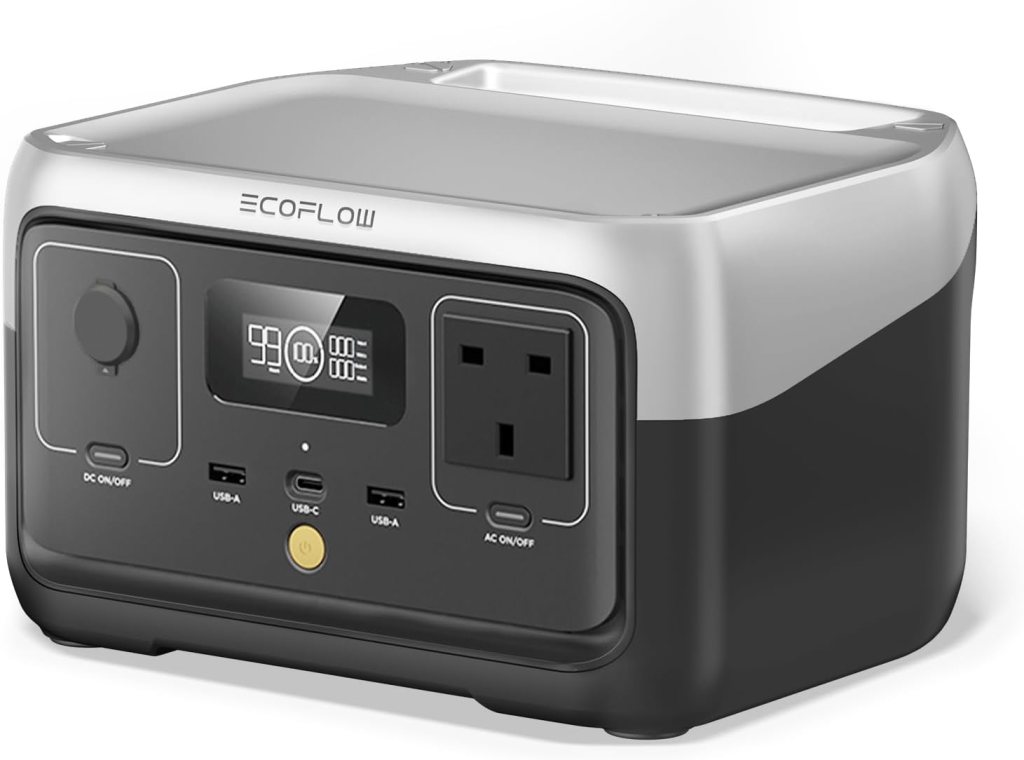
If you’re looking for a 300W power station, both the Jackery 300 Plus and EcoFlow River 2 we reviewed recently use high-quality LiFePO4 batteries that last up to 10 years, but each one suits a different type of user.
- Charging Speed (Winner: EcoFlow): The EcoFlow River 2 charges from a wall socket in just 60 minutes, which is twice as fast as the Jackery’s 2-hour charge time.
- Portability & Build (Winner: Jackery): The Jackery’s handle folds flat, so it’s much easier to fit into a packed car or backpack.
- Ports (Winner: Jackery): The Jackery has a 100W two-way USB-C port, so you can fast-charge modern laptops directly without needing a big AC power brick.
Who Should Buy It?
In short, choose the EcoFlow if you want the fastest charging. If you prefer a tough, easy-to-pack unit with great USB-C ports for your devices, the Jackery 300 Plus stands out. It’s quiet and the 10-year battery life makes it a smart long-term buy.
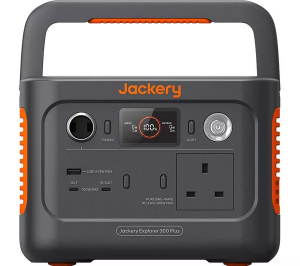
100W USB-C Port
LifePO4 Battery Lasts 10 Years
LED Light
288Wh capacity
5 Year Warranty
Jackery Explorer 300 Plus FAQ
What Size Portable Power Station Do I need: Is the Jackery Explorer 300 Plus Right For You?
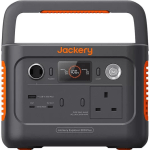
The Jackery Explorer 300 Plus is a compact/ultra portable unit (288Wh) that suits many hikers, campers and campervan users. However, the right size still depends on your exact appliances and your daily usage. To find out properly, try one of our free calculators.
Campervan Calculator:
These will give you a more accurate recommendation based on your actual power needs.
Is the Jackery 300 Plus waterproof?
No, it is not waterproof or water-resistant. While it has a very rugged outer shell built for the outdoors, the ports and internal fans are exposed. You must keep it inside your tent, under a tarp, or in your vehicle if it starts to rain.
Can I take the Jackery 300 Plus on an airplane?
No. Aviation authorities restrict lithium-ion batteries on passenger flights to a maximum of 100Wh (or up to 160Wh with special airline approval). Because the Jackery 300 Plus has a capacity of 288Wh, it is strictly prohibited in both carry-on and checked luggage.
Does the Jackery 300 Plus support pass-through charging?
Yes. You can plug the Jackery into a wall socket or solar panel to charge, while simultaneously using it to power your phone or laptop. Thanks to the upgraded LiFePO4 battery chemistry, doing this occasionally will not cause the severe battery degradation that older lithium-ion models suffered from.
Can the Jackery 300 Plus run a coffee machine or travel kettle?
No. The Jackery 300 Plus has a maximum continuous output of 300W. Even small travel kettles and pod coffee machines typically draw between 800W and 1500W. Plugging these in will immediately trigger the unit’s automatic overload protection.

