
Portable vs Rigid vs Flexible Solar Panels: What Are Best For You?
By: Jonny Graham | Updated May 2026 | 10 min read time
You have worked out your daily energy needs and bought the ideal portable power station for your campervan, motorhome or off-grid setup. But when you first open it, it is really just a big rechargeable battery. Once it is empty, you are out of power.
To turn that battery into a real off-grid solar generator that gives you free electricity wherever you go, you need to connect it to solar panels.
Shopping for solar panels for your setup can be confusing. Should you get the folding portable panels that are the same brand as your power station? Should you glue flexible panels to your campervan roof? Or should you bolt on heavy, traditional rigid panels for permanent van life?
Picking the wrong panel can hurt your van’s aerodynamics, lower your energy generation in cloudy UK weather, or cost you much more than needed.
Here is our full guide to portable, rigid, and flexible solar panels, for campervans, caravans, and off-grid mobile setups.
1. Portable (Folding) Solar Panels: The Plug-and-Play Option
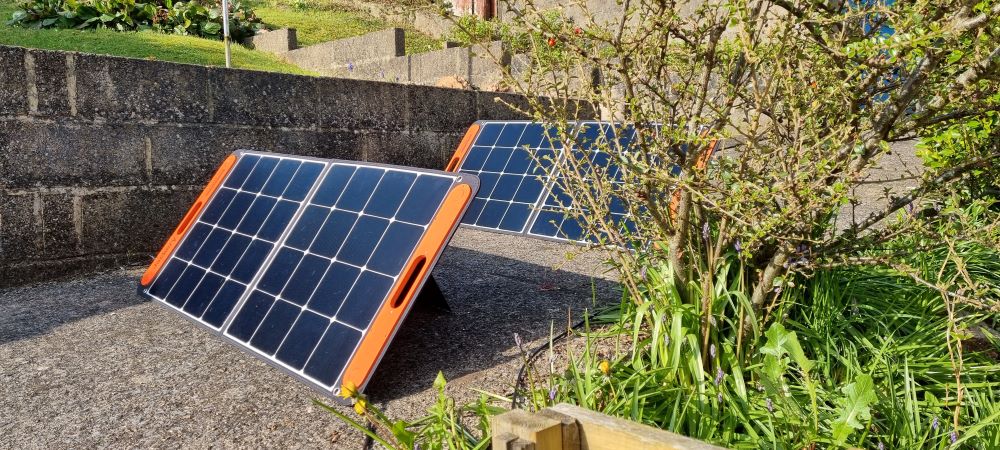
If you check out ads from brands like Jackery, EcoFlow, or Bluetti, you will mostly see portable, folding solar panels. These usually use monocrystalline solar cells sewn into tough, weather-resistant fabric. They fold up like a big briefcase with a handle, and open up with kickstands to stand on the ground.
The Advantages:
- Perfect Angles: The main benefit of a portable panel is that it can be moved. You can park your campervan or set up your tent in the shade, then run a cable to put your panels in the sun. You can also tilt them during the day to follow the sun and get the most energy.
- Zero Installation: No drilling, heavy lifting, or roof sealant required. Just unfold the panels, plug them into your power station, and start charging.
- Easy Storage: When your trip ends, just fold them flat and slide them under a bed or into a cupboard.
- The Cost: Portable panels cost the most per Watt. You pay extra for the light materials, folding design, and the brand.
The Disadvantages:
- Weather & Security Risks: Since they stand on their own, strong winds can blow them over. Also, if you leave your campsite for a hike, a £300 folding panel left on the grass could be stolen.
- Best For: Weekend campers, tent users, and anyone who drives their campervan daily and does not want permanent roof panels.
2. Rigid Solar Panels:
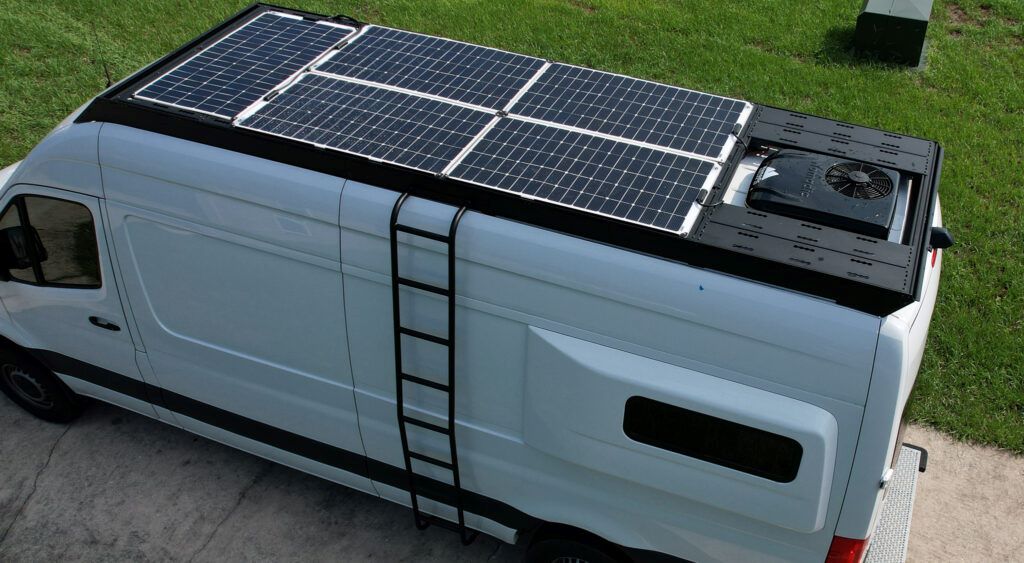
Rigid solar panels are the classic, heavy-duty panels you see on house roofs. They have solar cells protected by thick tempered glass and a strong aluminium frame.
If you are building a full-time campervan or an off-grid cabin, these are usually the standard choice.
The Advantages:
- The Price: Rigid panels are much cheaper than portable or flexible ones. Since they are the industry standard and made in large numbers, you can often get a good 100W rigid panel for under £100.
- Extreme Durability: These panels are made to last for decades in tough weather. Tempered glass can withstand heavy hail, low branches, and heavy rain without scratching or breaking.
- Always Charging: Since they are fixed to your roof, they collect energy whenever the sun is out, even while you are driving or parked at the supermarket.
The Disadvantages:
- The Setup: To install rigid panels, you need to drill holes in your van’s roof for the brackets, then seal the holes with a sealant like Sikaflex to stop leaks.
- Weight and Aerodynamics: These panels are heavy, usually about 8-12kg each. Since they sit above the roof on brackets, they can create drag and slightly reduce your fuel efficiency.
- Shade Issues: You cannot move these panels. If you park under a tree for shade, your solar panels will also be in the shade and will not make power.
- Best For: Full-time van lifers, motorhomes, and off-grid sheds where you need durability and the most daily energy.
3. Flexible Solar Panels: The Low-Profile Choice
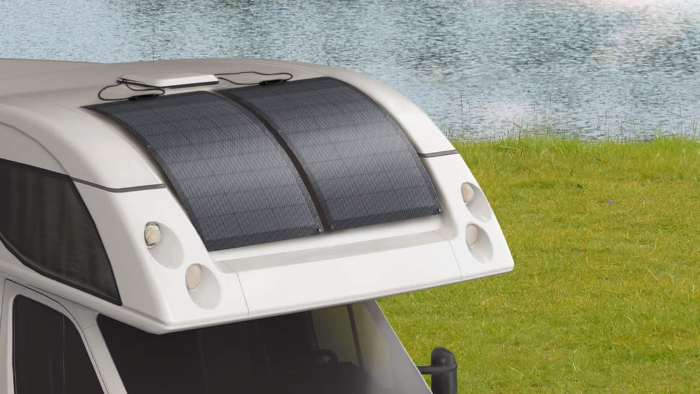
Flexible panels are very thin, often less than 3mm thick. They use plastic polymers instead of glass and aluminium to protect the solar cells. These panels can bend up to 30 degrees, so they fit the shape of your vehicle.
The Advantages:
- Ultra-Lightweight: A 200W flexible panel usually weighs under 4.9kg, compared to a rigid panel of the same size, which weighs 12kg, making it great for pop-top campervans or caravans with fibreglass construction where weight limits are a concern.
- Aerodynamics: Because they are glued flat directly to the roof, they create zero aerodynamic drag. From ground level, they are completely invisible, which is a massive bonus for “stealth” campervans parking in cities.
- No Drilling Required: You do not need heavy brackets. These panels are usually attached with strong glue.
The Disadvantages:
- Heat Degradation: This is their main downside. Solar panels get hot in the sun, which lowers their efficiency. Since flexible panels are glued flat to a metal roof, there is no airflow to cool them. This heat can shorten their lifespan, typically lasting just over 5 years instead of 20 or more years that rigid panels do.
- Delicate Surface: The plastic coating scratches more easily than glass. If it gets scratched a lot, the panel will not absorb light as well.
- Best For: Fibreglass roofs, teardrop trailers, Airstreams, and stealth vans where a rigid panel will not fit or would look out of place.
4. You Can Mix and Match Solar Panels!
A common myth in the off-grid world is that if you buy a Jackery or EcoFlow power station, you have to buy the same brand’s solar panels.
This is not true, and knowing this can save you a lot of money.
Almost all modern rigid and flexible solar panels use the standard MC4 connector. Most portable power stations include an adapter cable, like an MC4-to-XT60 or MC4-to-DC8mm cable.
This means you can buy a top-quality power station for your van and connect it to good third-party rigid solar panels on the roof. As long as you stay within the power station’s voltage limit, they will work well together.
5. Summary: Solar Panel Comparison at a Glance
| Feature | Portable (Folding) | Rigid (Glass) | Flexible |
| Price per Watt | High | Low | Moderate |
| Durability | Moderate | Extreme | Low |
| Ease of Setup | Plug-and-Play | Permanent Install | Permanent Install |
| Weight | Lightweight | Heavy | Ultra-Lightweight |
| Aerodynamics | N/A | Low | High |
| Security | Theft Risk | Secure | Secure |
6. Monocrystalline vs Polycrystalline Solar Panels
For campervans and caravans, we recommend fitting solar panels with monocrystalline cells, which are more efficient (15-22%) than older polycrystalline panels (12-16%). This matters for van-lifers because higher efficiency means you need less roof space. Instead of fitting four 100W polycrystalline panels, you might just need three 150W monocrystalline panels, saving weight, cost, and roof penetration points.
7. Realistic Breakdown Of Costs:
| Solar Panel Type | Cost Per Panel (100W) | Installation Cost | Total 200W System Cost | Lifespan | Cost Per Year (200W system) |
| Portable (Folding) | £180–£350 | £0 (plug & play) | £360–£700 | 10–15 years | £24–£46/year |
| Rigid (Glass) | £60–£180 | £200–£500 (brackets, cables, labour) | £260–£800 | 20–25 years | £11–£32/year |
| Flexible (Thin-Film) | £150–£300 | £100–£300 (adhesive, wiring, cable glands, labour) | £400–£900 | 5–10 years | £40–£90/year |
The Verdict: Which Should You Buy?
There is no single “perfect” solar panel, but there is a perfect panel for your travel style.
Choose Portable Folding Panels If:
You are a weekend camper or tent user. If you only go out a few times a year and want an easy, tool-free way to keep your system charged, portable panels are the best option. They let you move your panels to the sun while your van stays in the shade.
Choose Rigid Panels If:
You are either a full-time van-lifer or building a serious off-grid camper. These panels offer the best value and will last for years of wind and rain. Once they are installed, you do not have to worry about them.
Choose Flexible Panels If:
You have a curved roof or where weight matters. If you want a “stealth” setup that cannot be seen from the road and does not affect your fuel economy, flexible panels are the best choice.
Fitting Tips For Fixing Solar Panels To Your Campervan Roof
- If you are fixing to the roof with self-tapping screws or similar, fix them on the van ridges as these are the strongest points of the roof. I have found the best screw size for this job is 6.3 x 22mm or 5.5 x 22mm self-drilling, self-tapping screws. These are designed for sheet-to-sheet metal applications, making them suitable for securely fixing brackets to the roof skin.
- When glueing panels to the roof, instead of running straight lines, glue in a zigzag pattern for stronger adhesion. Lightly sand the surfaces of each face where the bonding will occur to ensure the glue gets a better grip.
- Use 2-3mm tile spacers evenly along the glue run and place something heavy on top until the glue is set. The spacers are just the right height for the glue to bond properly and prevent glue from being pushed out of the edges during setting. Before the glue sets, wipe along the edges with some wet wipes for a clean finish.
- Mount the panels in a location where you can route the cabling going in to the van behind or over a cupboard or wall panelling. This creates a much cleaner, unobtrusive entry point for the wires.
Ready to start building your off-grid setup?
Now that you know which panel suits your lifestyle, the next step is to check that it works with your power station.
Take a look at our free Solar Power Calculator to find out how many Watts of solar you will need to stay charged off-grid!
Frequently Asked Questions:
How many Watts Of Solar Panels Do I Need For a Campervan Roof?
Most standard campervans need between 200W and 400W of solar power to run basic appliances like a fridge, lights, roof-fan, and device chargers. To find your exact needs, calculate your total daily watt-hour consumption and match it to your battery size requirements.
Which is better for a Campervan: rigid or flexible solar panels?
Rigid monocrystalline panels are best for flat roofs because they are durable, long-lasting, and highly efficient. Flexible panels are better for curved roofs or stealth vans due to their aerodynamic, low-profile design, but they have a shorter lifespan and trap more heat underneath.
Do campervan solar panels work on cloudy days or in winter?
Solar panels still generate electricity on cloudy days, but their power output drops to about 10% to 25% of their maximum capacity. In winter, shorter daylight hours and lower sun angles mean you should supplement your system with a DC-to-DC alternator charger or a backup petrol generator.

