
Learn How to Calculate Your Portable Power Station Size UK Guide.
By: Jonny Graham | Updated May 2026 | 10 min read time.
Buying a portable power station is a big decision. Whether you’re setting up a campervan for full-time travel, planning a weekend camping trip, preparing for emergency home backup, or building an off-grid living setup, it’s important to choose a unit that can handle your needs without breaking the bank.
A common mistake for off-grid beginners is guessing the size of the battery they need. If your power station is too small, your devices might run out of power by the second day. If it’s too big, you could spend hundreds of pounds on extra capacity you’ll never use.
The good news is you don’t need to be an electrician to figure this out. With a few numbers from your appliances and some simple maths, you can work out your power needs in just a few minutes.
This power-sizing guide and power calculator will walk you through the process step by step, with real-world examples for camping, campervans, home backup, and off-grid living. By the end, you will know exactly how to size a power station for your specific situation.
Step 1: Find the Wattage of Your Appliances
Before you can figure out what size battery you need, you’ll need to know how much power each device uses. This is measured in Watts (W).
Every electrical device in the UK must show its power requirements on a sticker. You can usually find this information in three places:
- Printed directly on the “power brick” of the charging cable (like on a laptop charger).

- Stamped onto a sticker on the back or bottom of the appliance (like on a TV or travel kettle).
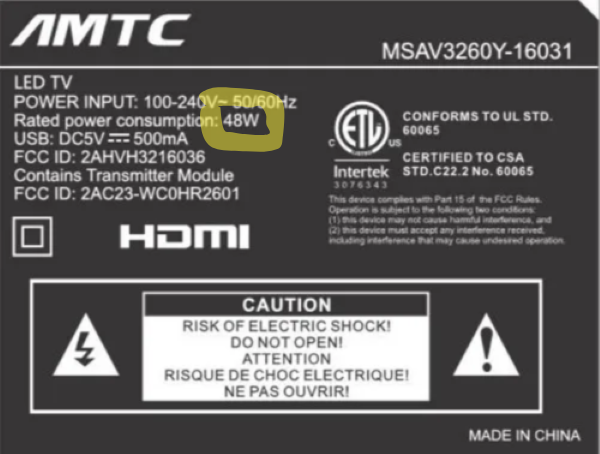
- Listed in the “Specifications” section of the product’s online manual.
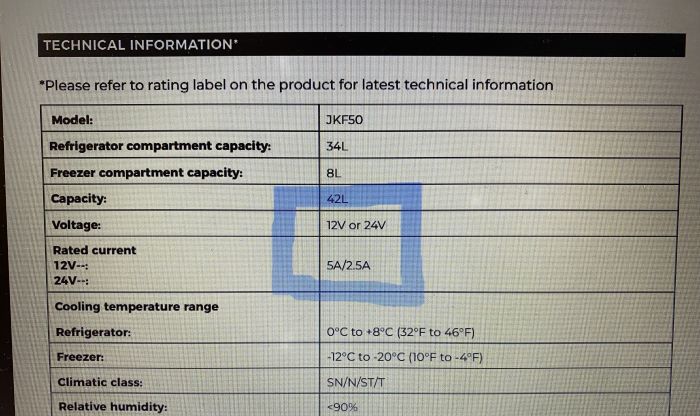
Look for the “W”: Find a number followed by a “W” (like 65W or 1200W). If you only see Volts (V) and Amps (A), just multiply them to get the Wattage:
Volts x Amps = Watts
From the example above, a campervan 12V fridge: 12V x 5A = 60 Watts
Make a List:
Write down each appliance you plan to use with your power station, along with its Wattage. This forms the foundation of your power station capacity calculations.
Step 2: The Magic Formula (Watts x Hours)
Once you know how many Watts your appliances use, you’ll want to see how much battery they’ll use in a day. Battery capacity is measured in Watt-hours (Wh).
To figure this out, multiply the device’s Wattage by how many hours you’ll use it each day:
Watts x Hours of Use = Watt-Hours (Wh)
Here’s a quick example using the figures from the above appliances for a weekend camping trip:
| Appliance | Running Watts (W) | Hours Used Per Day | Total Daily Watt-Hours (Wh) |
|---|---|---|---|
| TV | 48 | 2 | 96 |
| Laptop Charger | 65 | 2 | 130 |
| Fridge | 60 | 8 | 480 |
| Total Daily Usage | 706Wh |
In theory, a 706Wh power station would cover this daily usage. But in reality, we have to account for inefficient charging, so there’s one more important step to get the right size.
Step 3: The 85% Inverter Rule
When calculating power needs, many beginners simply add up their daily Watt-hours, buy a battery of that exact size, and then wonder why it runs out of power early. They forget about inverter inefficiency.
When your power station changes the DC power in its batteries to the 230V AC power your plugs need, some energy is lost as heat. Most good pure-sine-wave inverters are about 85% efficient.
To make sure you don’t run out of power, include this 15% loss. Take your total daily usage and divide it by 0.85:
- 706Wh (Total Daily Usage) ÷ 0.85 = 830Wh
To run these appliances safely without draining your battery, you’ll need a power station with at least 830Wh of capacity.
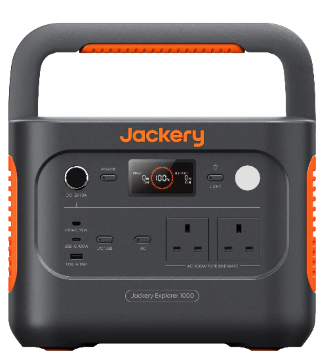
Either the Jackery Explorer 1000 v2: or the Bluetti Elite 100 v2: would be ideal for this; as both have enough capacity for future usage and expansion.
Interactive Calculator: Crunch Your Own Numbers
*Enter your daily hours of appliance usage in the table below to find your perfect power station size:*
🏠 Home Backup Power Calculator
Prepare for power cuts by entering your typical **uses**, **boils**, or **hours of runtime** for essential home appliances. We’ll instantly recommend the perfect backup power station to keep your lights on and fridge running.
| Icon | Appliance | Avg. Watts | Daily Usage | Total (Wh) |
|---|---|---|---|---|
| High Draw Cooking & Heating (Short-Use / Peak Loads) | ||||
| Induction Hob (1 Ring) (Assumes 10 mins/use) | 1600W | uses | 0 Wh | |
| Compact Air Fryer (e.g., Ninja) (Assumes 20 mins/use) | 1800W | uses | 0 Wh | |
| Electric Kettle (Assumes 5 mins/boil) | 2000W | boils | 0 Wh | |
| Coffee Maker (Assumes 5 mins/use) | 1200W | uses | 0 Wh | |
| Small Toaster (Assumes 3 mins/use) | 1200W | uses | 0 Wh | |
| Microwave (Assumes 3 mins/use) | 1600W | uses | 0 Wh | |
| Hair Straightener / Blow Dryer (Assumes 10 mins/use) | 1800W | uses | 0 Wh | |
| Cooking Subtotal: | 0 Wh | |||
| Pumps & Tools | ||||
| Sump Pump | 500W | hrs | 0 Wh | |
| Pumps & Tools Subtotal: | 0 Wh | |||
| Continuous Communication & Tech | ||||
| Laptop Charger (MacBook Pro) | 60W | hrs | 0 Wh | |
| Smartphone Trickle Charge | 10W | hrs | 0 Wh | |
| Tablet Trickle Charge | 30W | hrs | 0 Wh | |
| WiFi Router & Modem | 30W | hrs | 0 Wh | |
| Comm & Tech Subtotal: | 0 Wh | |||
| Home Comfort & Medical (Essential / Continuous Loads) | ||||
| Standard Refrigerator / Freezer | 100W | hrs | 0 Wh | |
| Mini Fridge | 40W | hrs | 0 Wh | |
| Combi Boiler Pump (To keep heating working) | 125W | hrs | 0 Wh | |
| Space Heater (Constant Draw) | 750W | hrs | 0 Wh | |
| Television (LED) | 50W | hrs | 0 Wh | |
| LED Lights (Total for 5 bulbs) | 35W | hrs | 0 Wh | |
| CPAP / Medical Device | 45W | hrs | 0 Wh | |
| Desk / Cooling Fan | 30W | hrs | 0 Wh | |
| Security System Cameras (Per Camera) | 5W | hrs | 0 Wh | |
| Comfort & Medical Subtotal: | 0 Wh | |||
RESULTS BOX
*Calculation includes a 15% buffer to account for common 240V AC inverter efficiency loss (the difference between battery capacity and usable output during a power cut).
Power Station Sizing By Use Case
Once you have crunched the numbers and know your daily usage (Wh), you will need a power station the same size or slightly larger to future-proof your investment. Here are some use cases for different situations:
Power Station for Camping (Weekend Trips)

For a 2-3 day camping trip, you’ll usually want to power:
- LED lights (10-30W)
- Phone chargers (15-30W total)
- Small portable fridge or cooler (45-65W)
- Occasionally, a laptop or tablet
Recommended size: 600-1,050 Wh
A power station in this range will meet your basic needs for a long weekend without needing to recharge. Adding a 200-300W solar panel lets you stay out even longer, as long as you get a few hours of sunlight each day to recharge.
Best for: Festival camping, weekend wild camping, and short caravan trips.
Recommended Power Station: Jackery Explorer v2 (1024Wh)
Power Station for Campervan (Extended or Full-Time Travel)
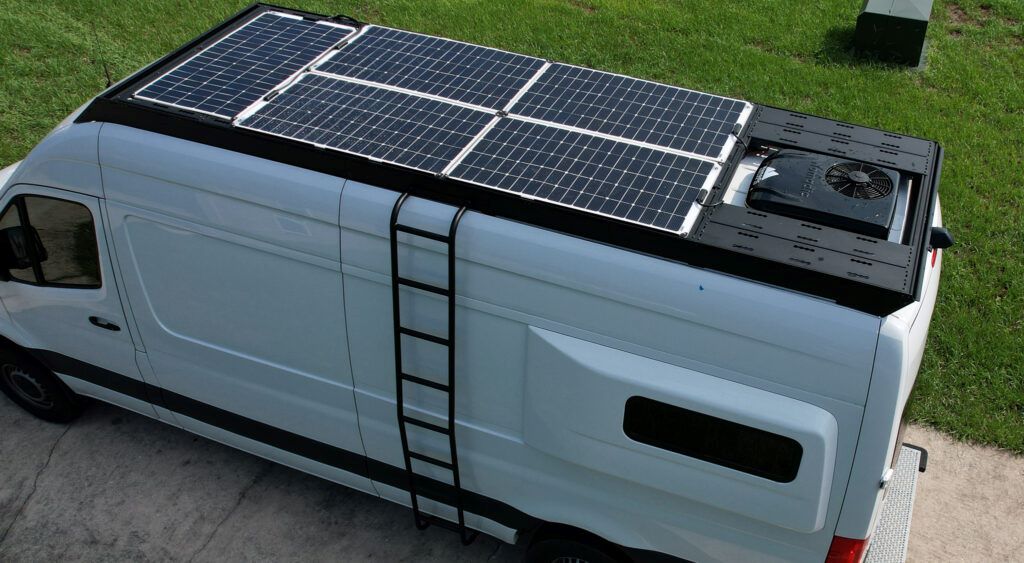
If you live in a campervan, you’ll need to run a fridge all day, charge several devices, and power lights, fans, water pumps, and sometimes high-power items like a coffee maker or laptop.
Daily usage:
- 12V compressor fridge: 360-500Wh
- Lights and fans: 50-100Wh
- Laptops, phones, tablets: 100-200Wh
- Water pump: 20-50Wh
- Total: 530-850Wh per day
Recommended size: 1,500-2,000 Wh (or an expandable system). This size gives you enough power for a full day, plus a 20-30% buffer for cloudy days or extra use. Pair it with 400-600W of solar panels for real energy independence.
Best for: Van life, full-time travel, and long road trips in the UK or Europe.
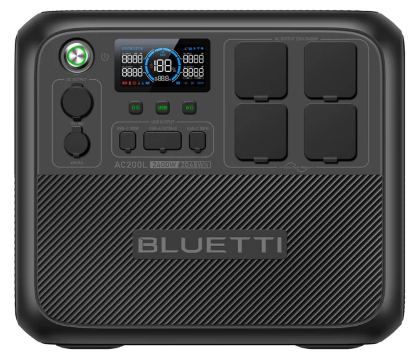
Recommended Power Station: Bluetti AC200L (2048Wh)
Power Station for Home Emergency Backup
If the power goes out, you’ll want to keep your devices running:
- Wifi router and modem (20-40W), fridge (150W running, cycles on/off)
- LED lights (20-50W)
- Phone chargers (15-30W)
- Laptop (50-100W)
Typical 24Hr-usage: 1000-1200Wh
Recommended size: 1,500-2,000 Wh
With this capacity, you can run your essentials for 24 to 48 hours without recharging. Choose a unit with pass-through charging and UPS mode so it can automatically take over during an outage and keep your router and important devices online.
Best for: Backup power during power cuts, keeping your internet online during outages, and running medical devices like CPAP machines.
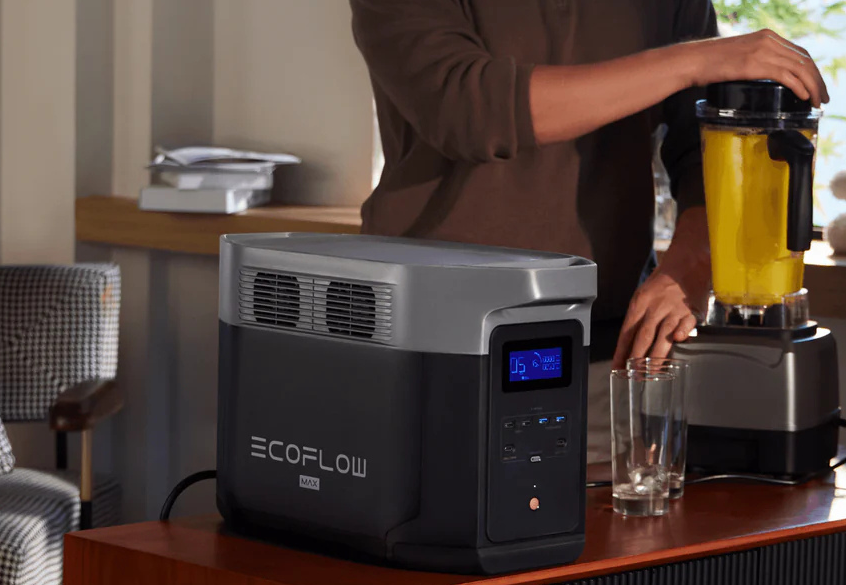
Recommended Power Station: EcoFlow Delta 2 Max (2048Wh)

Power Station for Off-Grid Lifestyle

If you live off-grid full-time in a cabin or static caravan, your power needs are similar to a small household. You’ll likely use:
- A full-size fridge (150-200W)
- Multiple lights and fans
- Laptop and entertainment devices
- Occasional power tools or kitchen appliances
Typical daily usage: 1,500-2,000Wh
Recommended size: 2,000-3,000 Wh + 600-800W solar
For an off-grid lifestyle, use your power station with a strong solar setup. In winter, you might need a small backup generator to help during long stretches of bad weather. Using solar, battery, and a generator together gives you reliable power all year.
Best for: Off-grid cabins, permanent tiny homes, and remote workshops.
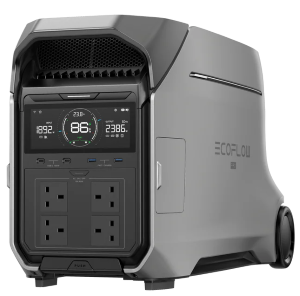
Recommended Power Station: EcoFlow Delta Pro 3
Solar Panel Calculator
Once you have decided on which power station you will be using, check out our solar panel calculator. Just choose your power station from the drop-down list, and the calculator will provide a list of the recommended solar panels and accessories needed to get your off-grid solar system up and running stress-free.
.
Reference Table:
| Use Case | Recommended Capacity | Typical Runtime | Why |
| Weekend Camping | 600-1,000 Wh | 2-3 days | Covers fridge, lights, charging |
| Van-Life (Full-Time) | 1,500-2,000 Wh | 1-2 days | Daily baseline + solar recharge |
| Home Emergency Backup | 1,500-2,000 Wh | 24-48 hours | Powers essentials during outages |
| Off-Grid Living | 2,000-3,000 Wh | 1-2 days | Handles household loads + solar |
Final Thoughts: Don’t Guess Your Power
Spending 10 minutes listing your appliance usage and calculating the total Wh is the most important step in building your off-grid system. It saves you from dealing with a dead battery and keeps you from spending too much on a bigger unit than you need.
Most Commonly Asked Questions
How do I know which size power station I need?
Calculate your daily energy usage first.
1) List all the devices you want to run and how many hours per day each will be used.
2) Multiply each device’s running watts x hours to get Watt-hours (Wh).
3) Add them up for your Total Daily Usage
4) Apply the 80% inverter efficiency rule
Example: If your daily usage is 400Wh, you’ll realistically need a 500-600Wh power station.
What is the difference between running watts and surge watts?
Running Watts = The continuous power a device uses while operating (this determines your daily energy needs).
Surge Watts (or Peak/Starting Watts) = The short burst of extra power needed when motors start up (fridges, pumps, fans, etc.).
Many devices, like fridges, fans, and power tools, need 2-4 times their running watts for a few seconds. Always choose a power station whose surge rating exceeds the maximum start-up load in your setup, to avoid an unexpected shutdown.
How long will a power station run my devices?
Use the runtime formula of Battery Capacity (Wh) x 0.80 divided by Device Running Watts (W) = Estimated hours.
The 0.80 accounts for inverter efficiency losses. In real life, expect slightly less runtime due to battery age, temperature, and other inefficiencies.
Should I buy a bigger power station than I think I need?
“Yes – within reason.”
A 20-30% buffer is highly recommended because:
1) Batteries lose efficiency over time.
2) Charging is never 100% efficient.
3) Cold outdoor weather reduces available power.
You’ll probably add more devices to your setup over time. It’s better to have some headroom than to run out of power during the night.
Are there any other features I should be looking for in a portable power station?
Before purchase make sure your power station has the following features:
Pure Sine Wave Inverter: Essential for sensitive console electronics to prevent crashes or hardware damage.
Pass-Through Charging: Allows you to use the power station as an Uninterruptible Power Supply (UPS) during home blackouts.
LiFePO4 Battery Cell Type: Offers over 3,000 charge cycles (lasting 10+ years) compared to older Lithium-ion cells (500 cycles).
What size power station do I need for a CPAP machine?
Most CPAP machines (with humidifier) use 30-80W depending on pressure settings and whether the heated humidifier is active.
Typical overnight usage (8 hours):
– 50W x 8 hours = 400Wh
– With 85% inverter rule: 400 ÷ 0.85 = 470Wh required
Recommended size: 600-1,000 Wh
This gives you enough capacity for a full night’s sleep plus a safety buffer. If you’re camping for multiple nights, pair it with a 100W solar panel to recharge during the day.

