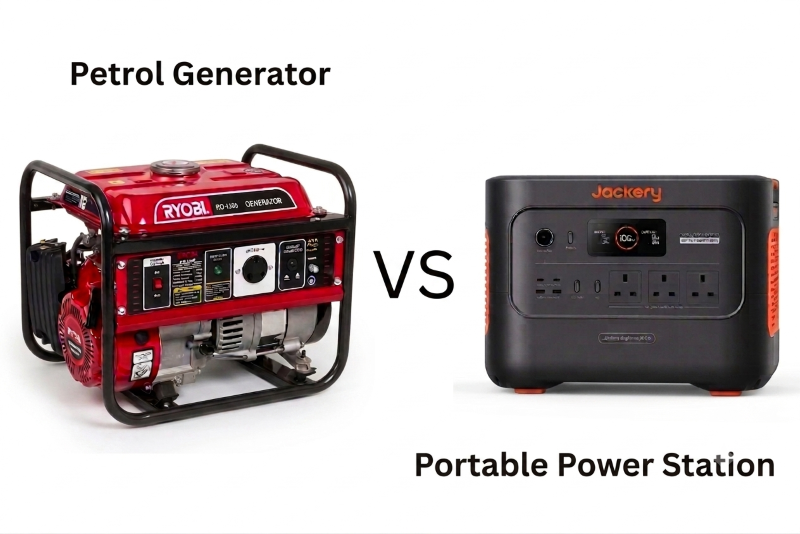
Portable Power Station vs Petrol Generator
By: Jonny Graham | Updated May 2026 | 8 min read time.
Should you buy a portable power station or a traditional petrol generator? We compare noise, running costs, emissions, and maintenance to help you choose.
If you need off-grid electricity for your campervan, a camping trip, or as a backup at home, you face an important choice. Should you go for a modern, lithium-powered portable power station or stick with a traditional petrol generator?
For many years, petrol generators were the only real option. But with new lithium battery technology, the off-grid power market has changed a lot. Now, modern power stations can easily run heavy-duty appliances like microwaves, power tools, and travel kettles.
Both options will keep your lights on, but they work very differently. Picking the wrong one can lead to extra costs and noise. Here’s a full comparison of portable power stations and petrol generators to help you choose the best fit for your needs.
1. Noise and UK Bylaws (The Noisy Neighbour Factor)

This is probably the biggest difference between the two, and, truth be told, for many people, it’s the main deciding factor.
Petrol Generators:
Traditional generators use internal combustion engines, much like those in lawnmowers. They make a steady, loud noise that can quickly bother your campsite neighbours.
In the UK, this is a major legal consideration. Under the Environmental Protection Act 1990, local councils can investigate noise from generators as a “statutory nuisance,” which can lead to hefty fines. Furthermore, almost all UK campsites enforce strict quiet hours (typically from 10:00 PM or 11:00 PM until 7:00 AM). If you are relying on a petrol generator to run a heater or a CPAP machine overnight, you simply will not be allowed to use it.
Generators also give off dangerous carbon monoxide. You should never use them indoors, in a tent, or inside a campervan.
Portable Power Stations:
Since they have no moving engine parts, portable power stations run almost silently. You might only hear a quiet hum from the cooling fan now and then.
Most importantly, they don’t produce any emissions and are completely safe to use indoors. You can put a power station on your campervan kitchen counter, inside your tent, or in your living room during a winter power cut without breaking any rules or risking your health.
2. The Strengths of Petrol (And The Hybrid Approach)
To be fair, traditional generators still have a big advantage in one area: you can refuel them instantly.
If you need to run heavy-duty power tools on a remote building site for long hours, a petrol or diesel generator is still the better choice. When it runs out, just add more fuel, and you’re ready to go again.
A power station, on the other hand, needs time to recharge from solar panels or a wall outlet.
The Hybrid Approach:
Many full-time van lifers or people in off-grid cabins use a smart “hybrid” approach. They use a quiet portable power station for most of their needs, powered by solar panels mounted on the roof, but keep a small petrol generator for emergencies. If there’s no sun for a week, they can run the generator outside for an hour to quickly charge the power station, then switch back to silent power for the rest of the day.
3. The 10-Year Cost Comparison
A portable power station may seem more expensive at first, but the real cost becomes clear when you look at it over 10 years.
Traditional Petrol Generator:
- Upfront Cost: £400 – £800
- Running Costs: High. You rely on changing petrol prices. Using a generator for a few hours each day can cost £10-£15 in fuel per weekend. Over 10 years, this can add up to many thousands of pounds.
- Maintenance: High. You need to change the engine oil, replace the spark plugs, clean the air filters, and prepare the engine for winter to prevent fuel from going bad.
Modern Portable Power Station (LiFePO4):
- Upfront Cost: £800 – £1,500
- Running Costs: Virtually zero. If you charge it using portable solar panels, your energy is completely free. Even if you charge it at home before a trip, it only costs pennies to fill up. A 2,000 Wh charge from the mains costs around 60 pence at current UK electricity rates.
- Maintenance: None. There are no moving parts, no fluids, and nothing you need to service.
When you add up fuel, servicing, oil, and the hassle of maintaining a petrol engine, a power station often ends up cheaper within 3 to 5 years. It’s also much easier and more pleasant to use.
4. Side-by-Side Comparison
Here’s a quick summary table of how portable power stations and traditional generators compare in the most important areas:
| Comparisons | Portable Power Station | Petrol/Diesel Generator |
| Power Quality | Pure sine-wave (safe for electronics) | Inverter models – pure sine basic models = dirty modified power |
| Typical Output | 300 to 4,000 Wh / 500 – 3,200W | 1,000 to 4000 W+ |
| Runtime | Limited by battery capacity (until recharged) | Limited only by the size of your fuel tank and jerry cans |
| Noise | Virtually silent (faint cooling fan hum) | Moderate to extremely loud mechanical roar |
| Emissions | None | Toxic exhaust and Carbon Monoxide |
| Maintenance | Zero maintenance required | Regular servicing (oil changes, filters, spark plugs) |
| Upfront Cost | Higher initial purchase price | Lower initial purchase price |
| Running Cost | Extremely low (free if using solar panels) | High (constant fuel and oil purchases) |
| Indoor Use | Yes (100% safe inside tents, vans, and homes) | No (Strictly outdoor use only) |
| Ease of Use | Simple push-button start | Manual (pull-cords, chokes, and refuelling) |
5. Why Conventional Petrol Generators Can Damage Electronics
- They produce what’s known as “dirty power,” or a modified sine wave. We explained this in more detail in another article here.
- This can lead to overheating, glitches, a shorter lifespan, or even failure in sensitive devices such as:
- Laptops & computers
- TVs & gaming consoles
- Routers & modems
- CPAP machines & medical equipment
- Fridge/freezer electronics (modern ones with inverters)
- Phone chargers & other switch-mode power supplies
Damage is more likely to happen during start-up or shutdown, when the generator is overloaded, or when it runs out of fuel, which can cause sudden power surges or drops.
Safer Alternatives
| Conventional Petrol Generator | Dirty (high THD) | Risky for sensitive gear | OK for heaters, lights, power tools |
| Inverter Generator (e.g. Honda EU series) | Clean (low THD <3–5%) | Generally safe | More expensive but much better |
| Portable Power Station | Pure Sine Wave | Very safe (grid-like) | Best choice for indoors & electronics |
Portable power stations, such as EcoFlow, Bluetti, or Jackery, are the safest choice for electronics. They provide a clean, pure sine wave that is as good as, or even better than, regular mains electricity.
The Verdict: Which Should You Buy?
For most people, the modern portable power station is the clear winner.
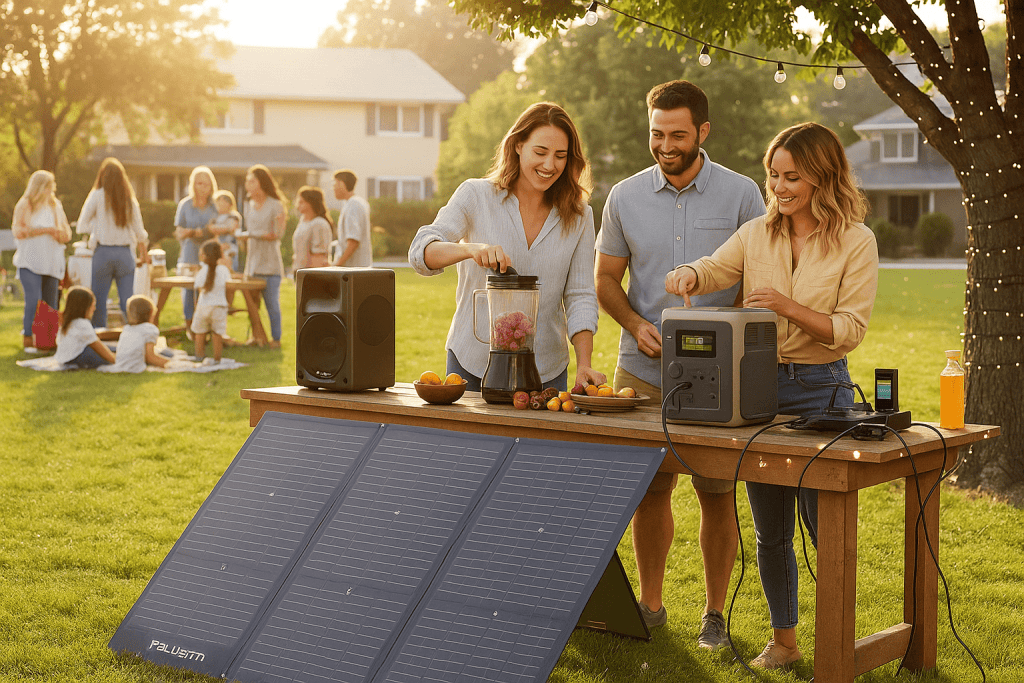
If you’re building out a campervan, going on a camping trip, or need backup power at home, being able to run your electronics safely and quietly indoors makes a big difference. You won’t have to worry about waking up neighbours, messy oil changes, or buying petrol all the time.
Choose a Traditional Generator If:
You work on a remote, outdoor construction site and run heavy-duty machines like welders all day. In these tough, high-power situations, being able to refuel to get the job done quickly makes a petrol or diesel generator the better choice.
Choose a Portable Power Station If:
You want safe, quiet, and maintenance-free power for campervans, camping or home power cuts. The higher upfront cost will quickly pay off through future fuel savings.
Ready to Go Silent and Off-Grid?
If you’ve decided a modern, lithium-powered setup is right for you, the next step is to find the right size unit for your appliances.
Check out our Portable Power Station Reviews to see the best pure sine-wave units available. If you’re not sure how much power you need, use our free Appliance Power Calculator for a quick, custom recommendation.
Frequently Asked Questions:
Is it safe to use a portable power station indoors?
Yes, portable power stations are completely safe to use indoors. They produce zero emissions, no carbon monoxide, and no fumes, unlike petrol or diesel generators, which emit dangerous carbon monoxide.
How much quieter are portable power stations compared to petrol generators?
Most portable power stations run at 30-50 dB while charging or under load (which is comparable to a quiet conversation or fridge hum). Petrol generators operate between 60-95 dB, which is as loud as a lawnmower or chainsaw. This makes power stations far more suitable for use in UK homes where noise complaints are common.
Which is cheaper long term: a portable power station or a petrol generator?
When looking at costs, portable power stations work out cheaper in the long run. Petrol generators have a lower purchase price, but you pay more for fuel and maintenance.
Power stations have a higher upfront cost, but almost zero running costs when using solar power.
Are petrol generators safe for electronics?
Conventional petrol generators produce power with voltage fluctuations and high harmonic distortion, which can damage laptops, TVs, routers, CPAP machines, and modern fridge electronics. Portable power stations are the safest option in portable power, as they produce electricity similar to that provided by the main grid.

