By: Jonny Graham | Updated May 2026 | 4 min read time.
Pure Sine Wave vs Modified Sine Wave Inverters Explained

If you’re looking for a portable power station or setting up a DIY campervan electrical system, you’ll soon see the term “Pure Sine Wave Inverter.” Manufacturers highlight this feature on their packaging and often use it to explain a higher price.
But what does that really mean? More importantly, do you actually need one, or can you save money with a cheaper “Modified Sine Wave” option?
Here’s the short answer: If you want to safely power modern electronics, you really do need a pure sine wave inverter. Using the wrong type with your laptop or CPAP machine can cause overheating, buzzing noises, or even permanent damage.
Let’s break down how these inverters work and why the difference is important, without any confusing jargon.
1. What Does an Inverter Actually Do?

Before we compare the two types, it helps to know what an inverter actually does.
The batteries in your portable power station or campervan store DC (Direct Current) power. But the regular plug sockets in your home use AC (Alternating Current) power.
You can’t plug an AC household appliance straight into a DC battery. The inverter is the key part inside your power station that acts like a translator. It turns DC power from the battery into 230V AC for your TV, kettle, or laptop charger.
How well the inverter does this job decides whether it makes a pure sine wave or a modified sine wave.
2. Pure Sine Wave: The Gold Standard
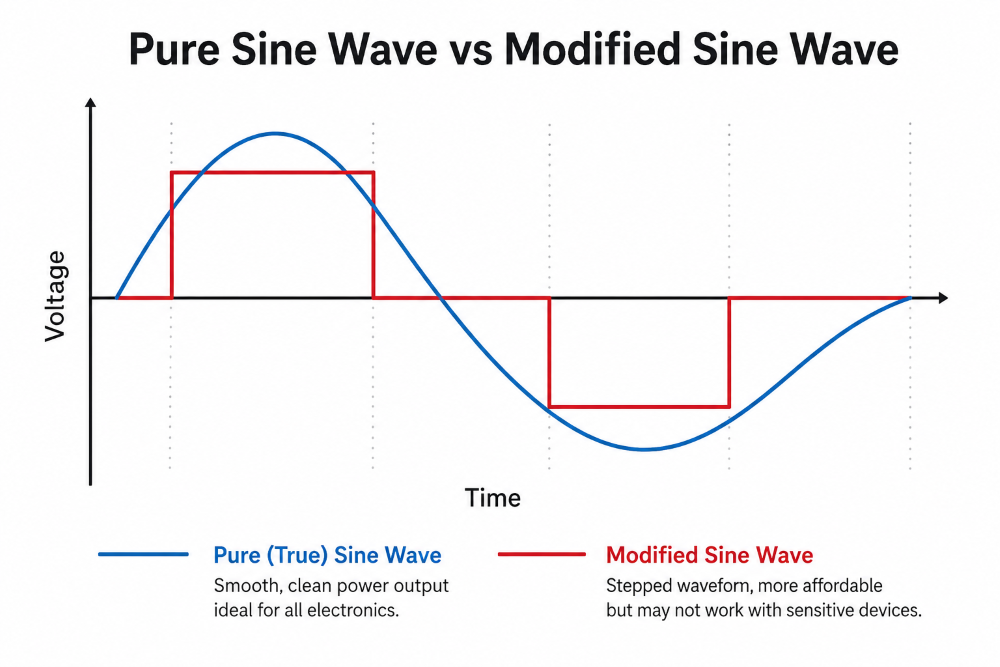
When you plug something into a regular wall socket at home, the electricity flows in a smooth, steady curve. That’s called a pure sine wave.
A pure sine wave inverter in a portable power station copies this smooth, high-quality power from the grid.
- What it runs: Pretty much everything. Since this is the same type of electricity your devices are made for, a pure sine wave is totally safe for sensitive electronics. That includes MacBooks, smart TVs, CPAP machines, game consoles, and appliances with delicate motors, like high-end campervan fridges.
- The benefit: Your electronics will run smoothly, stay cool, and stay quiet—just like they do at home.
3. Modified Sine Wave: The Budget Option
Older or much cheaper inverters use a modified sine wave. Instead of a smooth curve, the electricity comes out in a choppy, step-like pattern. It’s a rough, blocky version of real grid power.
These inverters are cheaper to make, so they’re common in budget and entry-level gear to keep costs low.
- The problem: Modern electronics don’t work well with this choppy power. A modified sine wave is fine for simple things like older-style light bulbs or basic heaters, but it can really mess up complex circuits.
- The risks: If you plug sensitive electronics into a modified sine wave inverter, you might hear a loud, annoying buzz from the power supply. Motors in things like fans or power tools can get hot, run poorly, and drain your battery faster. More importantly, the microprocessors in modern laptops and medical gear can overheat and get permanently damaged.
4. How to Tell Which One You Need (And What to Buy)
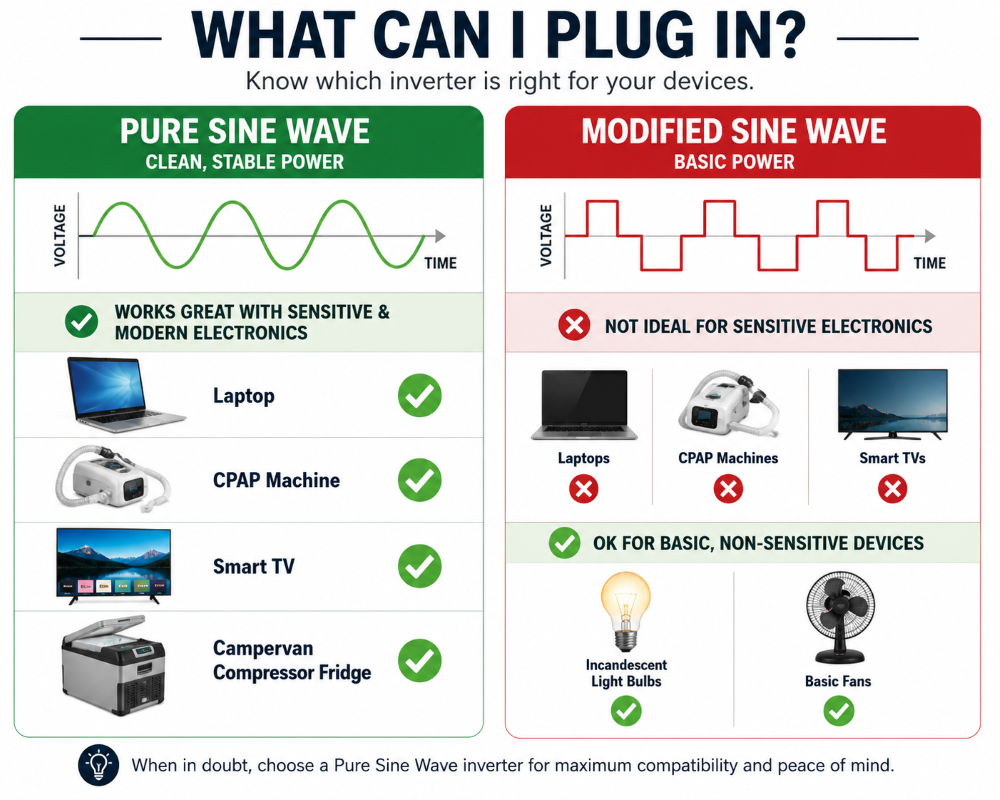
If you’re building a modern campervan, going on camping trips, or need backup power at home, the answer is simple: Use a pure sine wave inverter. It’s not worth risking a £1,000 laptop just to save £50 on a cheaper inverter.
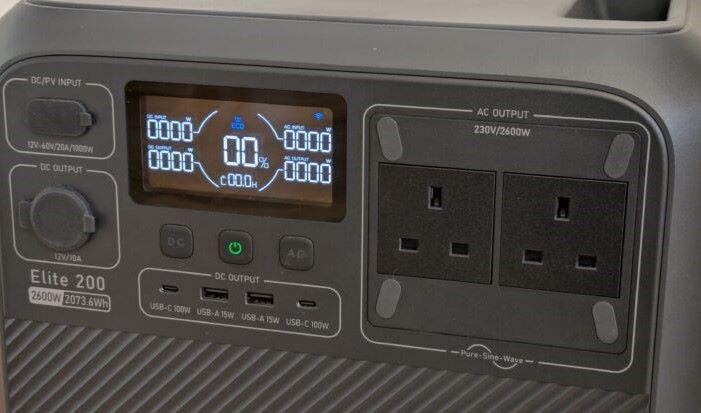
The good news is that if you’re buying a modern, high-quality portable power station, you don’t have to worry—these usually come with pure sine wave inverters already built in.
Top brands like EcoFlow, Bluetti, Anker SOLIX, and Jackery use pure sine wave inverters in their main products. You only need to watch out for modified sine wave inverters if you are:
- Buying ultra-cheap, unbranded “power boxes” from online marketplaces.
- Purchasing very old, second-hand portable power stations.
- Buying a budget standalone inverter for a traditional DIY Victron-style battery setup.
Ready to pick a safe, pure sine wave power station?
Take a look at our full Portable Power Station Reviews to find the best, electronics-safe unit for your next off-grid trip.
Frequently Asked Questions (FAQ)
Will a Modified Sine Wave inverter damage my appliances?
It depends on what you plug in. Simple things like heaters or older power tools usually work fine. But sensitive electronics and appliances with variable-speed motors can be damaged or wear out faster due to the extra heat from uneven power.
Why are Pure Sine Wave inverters so much more expensive?
Pure sine wave inverters cost more because they have more advanced parts inside. They use special components to make smooth, steady power, just like what you get from a wall outlet at home.
How do I know which type of inverter my power station currently has?
Look at the label on your power station. If it says “Pure Sine Wave” or “True Sine Wave,” that’s what you have. If it doesn’t say, or if the inverter was very cheap, it’s probably a Modified Sine Wave unit.

