By: Jonny Graham | Updated May 2026 | 6 min read time.
Are Portable Power Stations Safe? A Comprehensive UK Guide
Modern portable power stations have changed the way we camp, travel in vans, and handle home emergencies. They provide 230V AC mains power quietly and without emissions, making them much safer than old petrol generators.
But since these units store a lot of energy and use the same voltage as your home sockets, you need to handle them with the same care and caution.
Are portable power stations safe? Yes, as long as you buy from a trusted brand and use them properly. Here’s what you should know about their safety features and the key steps to keep your setup safe.
1. Built-in Protection: The Battery Management System (BMS)
When you choose a portable power station from a well-known brand like EcoFlow, Bluetti, or Jackery, you’re getting more than just a box of batteries. You’re also getting advanced software called a Battery Management System (BMS).
The BMS is like the digital brain of the power station. It constantly checks the voltage, current, and temperature of every cell. If it spots anything unsafe, it will shut down the unit right away to prevent damage or fire, which is called thermal runaway.
A good BMS gives you several important layers of protection:
- Overcharge & Over-discharge Protection: It stops the battery from taking in too much power when charging and keeps you from draining it completely, which could seriously harm the cells.
- Temperature Regulation: If you leave the unit in a very hot campervan or try to charge it in freezing weather, the BMS will stop charging until the inside temperature is safe again.
- Short Circuit Protection: If you plug in a faulty device, the BMS will quickly cut the power to protect both you and the power station’s inverter.
The Golden Rule: This advanced software is why you should avoid cheap, unbranded power stations from online marketplaces. Cheaper copies often use poor-quality BMS boards, so you lose that important safety protection.

2. Battery Chemistry: Why LiFePO4 is the Safest Choice
While the BMS keeps things safe on the digital side, the battery’s chemistry matters just as much. As we covered in our battery guide here, the industry is moving away from older Lithium-ion (NMC) batteries and switching to LiFePO4 (Lithium Iron Phosphate).
When it comes to safety, LiFePO4 is much better:
- Thermal Stability: LiFePO4 cells can handle much higher temperatures before breaking down or catching fire, unlike older lithium batteries.
- Puncture Resistance: If the battery is ever damaged or punctured, LiFePO4 is much less likely to catch fire.
- The Van Life Advantage: If you’re installing a power station in a small space, like a wooden campervan, where temperatures can vary widely, choosing a LiFePO4 model offers the best safety.
3. Operational Safety: The Essential “Do’s and Don’ts”
Even with a great BMS and stable LiFePO4 batteries, most accidents with portable power stations happen because of user mistakes. To stay safe off-grid, follow these simple guidelines:
✅ DO Ensure Proper Ventilation
Portable power stations get hot when running big appliances like a kettle or microwave, or when charging quickly. They have built-in fans to help cool things down.
- The Rule: Don’t use the unit inside a sealed box or cover it with sleeping bags or gear. Always leave 5 to 10 centimetres of space around the fan vents. If the fans are blocked, the unit can overheat quickly.
❌ DON’T Expose the Unit to Moisture
Even though they’re often advertised for outdoor use, most portable power stations are not waterproof or weatherproof. - The Rule: Keep your power station away from rain, wet grass, and spilled drinks. In a campervan, don’t place it near the rear doors where rain or condensation could get into the AC ports and cause a short circuit.
❌ DON’T Daisy-Chain Extension Leads
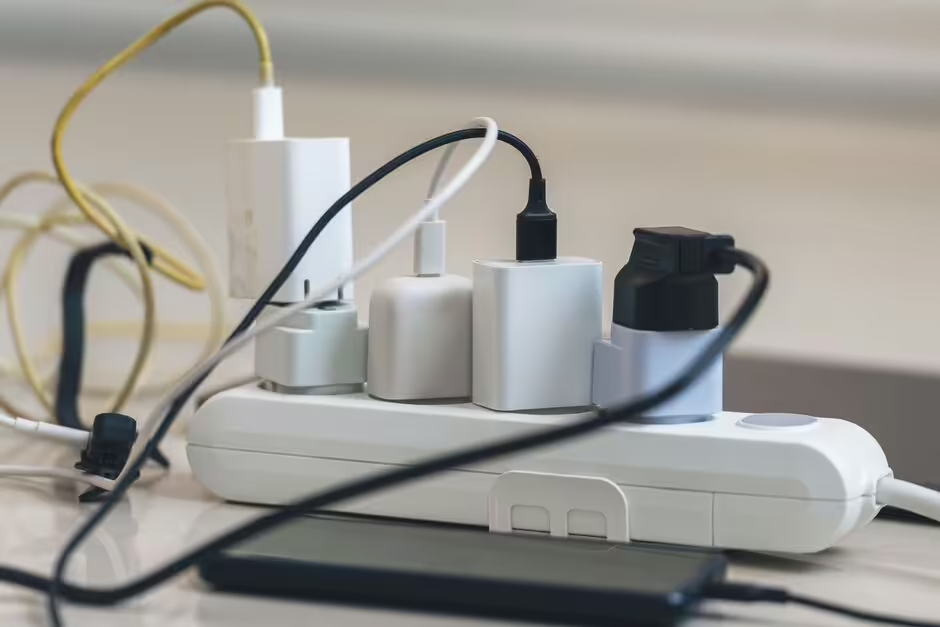
It’s tempting to plug a 4-way extension lead into your power station, then add another lead to reach outside your tent or van. - The Rule: This is called “daisy-chaining,” and it’s very dangerous. It can easily overload your power station, causing the wires to overheat or melt. Always plug high-power appliances straight into the unit.
Compliance, Earthing, and RCDs (The Technical Details)
For UK users, electrical safety means more than just keeping the unit dry and well-ventilated. It’s also important to know how these devices handle “earthing,” especially if you want to use them in a campervan or as a home backup.
Certification Marks (UKCA and CE)
Before you buy a power station, look for the UKCA (UK Conformity Assessed) or CE mark in the manufacturer’s details. The UKCA mark is the current safety standard for products sold in Great Britain. It shows the unit has passed strict tests for electrical insulation, fire resistance, and electromagnetic compatibility.
Understanding “Floating Neutrals”
If you check technical forums or watch off-grid YouTube videos, you’ll often hear that portable power stations have a “floating neutral”.
In a standard UK house, the neutral wire is connected to the earth. In a portable power station, the neutral wire is kept separate inside the unit.
- The Benefit: For standalone use, like plugging in a fridge, laptop, or power tool directly, a floating neutral is very safe. Since the system is isolated, if you touch a live wire by accident, the electricity can’t travel through your body to the earth. This greatly lowers the risk of a serious shock from a single fault.
- The Warning: A floating neutral can be a big safety problem if you connect the power station to a campervan fuse box to power several wall sockets.
When to Use an RCD
An RCD (Residual Current Device) is a life-saving trip switch that instantly cuts power if it detects current leaking to earth (such as through a person).
- Outdoor Extension Leads: If you are running an extension lead from your power station out into the damp grass to power an electric grill or heavy-duty power tools, using a simple plug-in RCD adapter at the power station socket adds an excellent layer of safety.
- Home and Van Integration: Here is the most important technical warning for DIY builders: standard UK house and campervan RCDs require a bonded neutral to function correctly. Because standard power stations have floating neutrals, plugging a basic power station directly into a campervan consumer unit may mean your trip switches won’t work during an emergency.
- The Solution: If you are using a portable power station to power a hardwired 230V system with its own consumer unit, you must consult a qualified auto-electrician. They will need to safely create a “neutral-earth bond” specific to your setup to ensure your RCDs can actually detect a fault and save your life. (Note: If you use a dedicated Power Hub, like the EcoFlow Power Kits, these are designed to be grounded to your vehicle chassis, resolving this issue internally!)

Final Thoughts: Are Power Stations Safe?
Modern portable power stations are impressive pieces of engineering. With advanced Battery Management Systems and stable LiFePO4 batteries, they are probably the safest way to get off-grid power in the UK today.
Treat your power station with the same care as any 230V mains electricity. Give it plenty of space to breathe and avoid using cheap extension leads. If you follow these simple tips, your power station will give you safe, quiet energy for years of off-grid adventures.

