Power Station Battery Types
By: Jonny Graham | Updated May 2026 | 5 min read time.
When you shop for a portable power station, you’ll see terms like “LiFePO4,” “NMC,” and “LFP,” as well as claims of “how many years of use.”
If you plan to spend a considerable amount on an off-grid power setup, it’s important to understand battery chemistry. It affects the unit’s weight, lifespan, and whether it fits your needs.
Most power stations use either standard Lithium-ion or LiFePO4 batteries. Here’s what you should know about each type.
How Battery Lifespan is Measured
Manufacturers measure battery life in charge cycles, not years.
A charge cycle means using a battery from full to empty, then charging it back to full.
The 80% Capacity Rule
Many people think batteries “wear out” when they reach their cycle limit, but that’s not true.
If a power station is rated for 500 cycles, after 500 full uses, the battery will have about 80% of its original capacity.
The battery still works, but it holds a bit less charge than when new. For most people, 80% capacity is still useful—you get 800Wh instead of 1000Wh.
LiFePO4 (Lithium Iron Phosphate): The Long-Term Investment
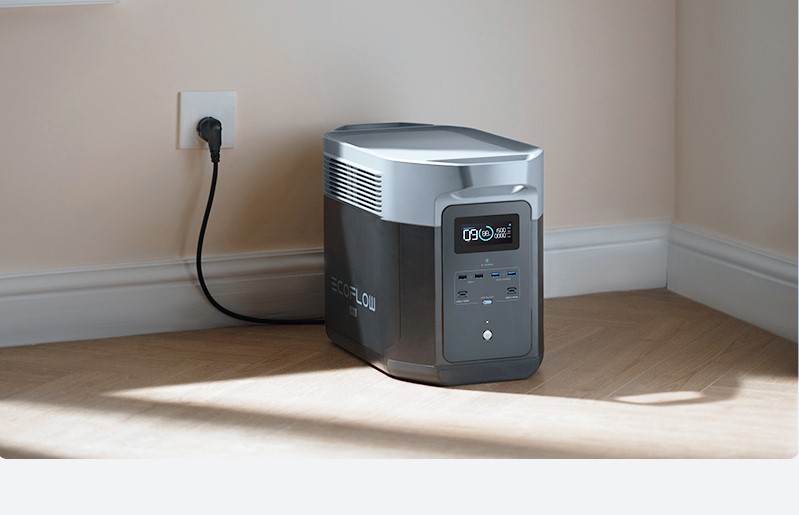
In recent years, top portable power station manufacturers have switched to using LiFePO4 (LFP) batteries.
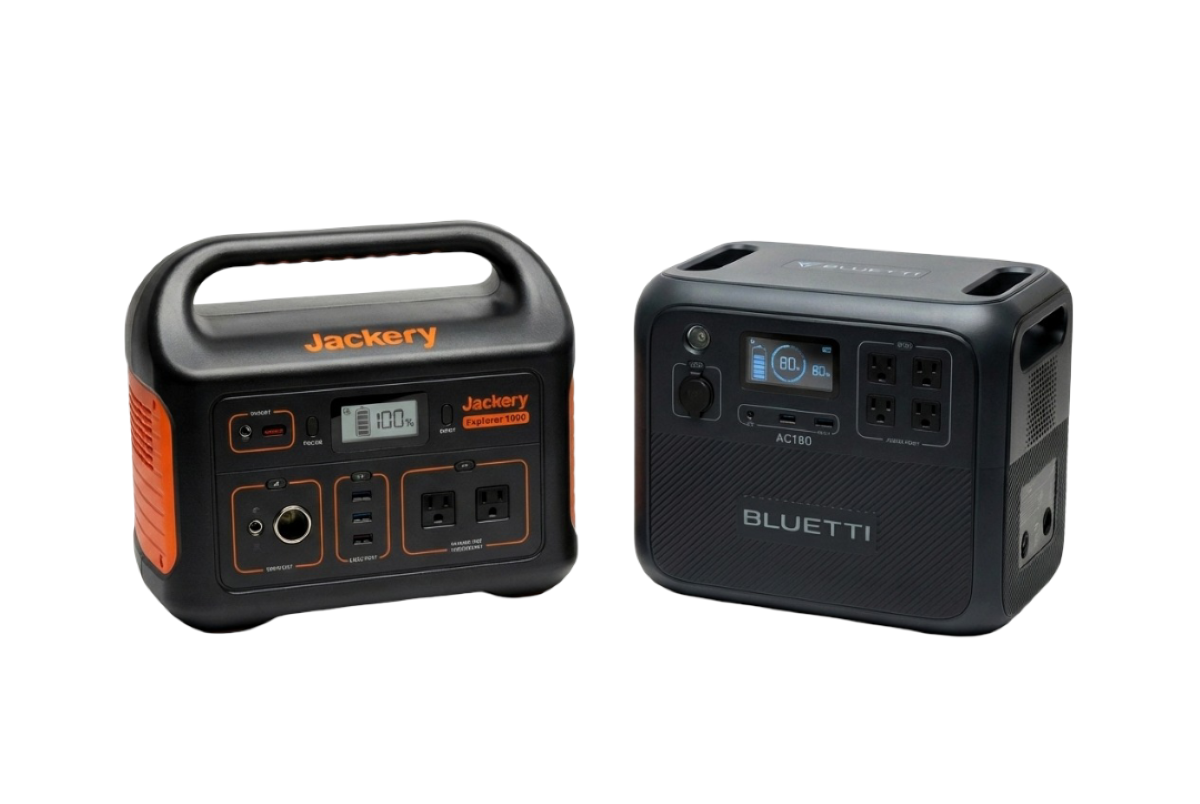
Brands such as EcoFlow, Bluetti, and Anker SOLIX now use this battery type in most of their main models.
Advantages
Long lifespan: LiFePO4 batteries typically last over 3,000 charge cycles before reaching 80% capacity. If you use and recharge them every day, you’ll notice any decline after about 8-10 years.
Thermal stability: LiFePO4 batteries are much more stable than standard lithium-ion ones. They handle higher temperatures better and lose capacity more slowly when kept fully charged.
Storage tolerance: You can keep a LiFePO4 power station fully charged and connected to solar or a wall socket for an extended time without accelerating wear. Standard lithium-ion batteries don’t handle this as well.
Disadvantages
Lower energy density: LiFePO4 batteries are bigger and heavier for the same amount of power. For example, a 1000Wh LiFePO4 unit weighs about 20-30% more than a similar NMC unit.
Cold-weather performance: You shouldn’t charge LiFePO4 batteries when temperatures are below 0°C, as this can cause permanent lithium plating on the anode. Most newer models include low-temperature protection to prevent this damage, though this safety feature means the unit may refuse to charge in winter until it’s moved to a warmer spot.
Standard Lithium-ion (NMC/NCA): The Portable Option
Standard lithium-ion batteries use NMC (Nickel Manganese Cobalt) or NCA (Nickel Cobalt Aluminium) chemistry. This is the same technology found in smartphones, laptops, and most electric cars.
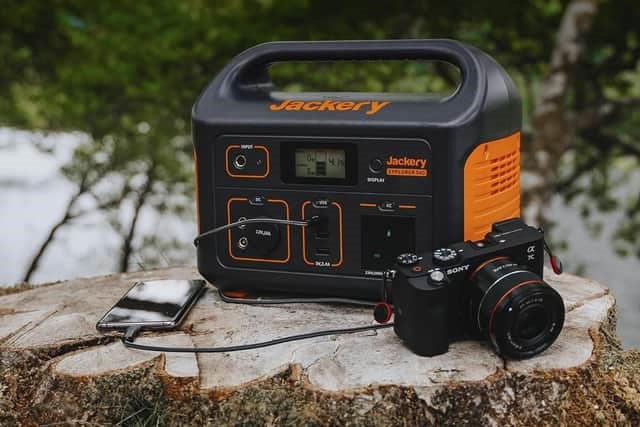
Older power stations and some current Jackery models use this chemistry.
Advantages
High energy density: NMC batteries store more power in smaller, lighter units. This matters if you need something portable for hiking, photography, or solo camping.
Better cold tolerance: Standard lithium-ion batteries work a bit better in freezing temperatures than LiFePO4, but you still shouldn’t charge either type below 0°C.
Disadvantages
Shorter lifespan: Most NMC power stations last for 500-800 cycles before dropping to 80% capacity. That’s about a third as long as LiFePO4 batteries.
Storage sensitivity: Keeping NMC batteries fully charged for long periods wears them out faster. Storing them completely empty also harms the cells.
Temperature sensitivity: NMC batteries wear out faster in hot environments, such as cars left in the sun during summer.
Which Battery Chemistry Should You Choose?
The best battery type depends on how you plan to use your power station.
Choose LiFePO4 If:
- Daily use: You’re building a campervan, living off-grid, or using the power station as regular backup power
- Stationary installation: Weight doesn’t matter because the unit stays in one place
- Long-term investment: You want 8-10 years of reliable service
- High-temperature environments: The unit will live in a van or garage that gets hot
Trade-off: You’re choosing extra weight in exchange for longer life and more stability.
Choose Standard Lithium-ion If:
- Occasional use: Weekend camping, emergency backup used a few times per year
- Portability is critical: You frequently carry the unit away from vehicles.
- Budget-conscious: NMC units often cost less upfront
- Light usage: Using it 10-20 times per year means even 500 cycles lasts a decade
Trade-off: You get a shorter lifespan, but your unit will be lighter and cost less.
Real-World Lifespan Examples
Here’s how cycle ratings look in real-life situations:
Daily use scenario (van life):
- LiFePO4 (3,000 cycles): 8-10 years
- NMC (500 cycles): 16-18 months
Weekend warrior scenario (camping 20 weekends/year):
- LiFePO4 (3,000 cycles): 150 years (effectively unlimited)
- NMC (500 cycles): 25 years
Emergency backup scenario (used 5 times/year):
- LiFePO4 (3,000 cycles): 600 years (irrelevant)
- NMC (500 cycles): 100 years (irrelevant)
For people who use their power station only occasionally, cycle life doesn’t matter much. Instead, time-based ageing is the main limit. Most lithium batteries lose 2-3% of their capacity each year, no matter how often you use them.
What About Hybrid or “Mixed” Chemistries?
Some brands try out hybrid or alternative lithium battery types. Unless you’re looking at a rare model, you’ll usually be choosing between LiFePO4 and NMC.
Sodium-ion and solid-state batteries are new technologies, but they won’t be ready for portable power stations by 2026.
Making Your Decision
To decide, ask yourself two questions:
- How often will I actually use this? (Daily vs occasional)
- Does weight matter for my use case? (Stationary vs portable)
If you’ll use your power station every day or keep it installed in one place, LiFePO4 is worth the extra weight. If you only use it occasionally and want something easy to carry, standard lithium-ion is a good choice.
Ready to pick a unit? Take a look at our portable power station reviews to compare LiFePO4 and lithium-ion models. You can also use our appliance power calculator to determine the size of the power station you will need.

